

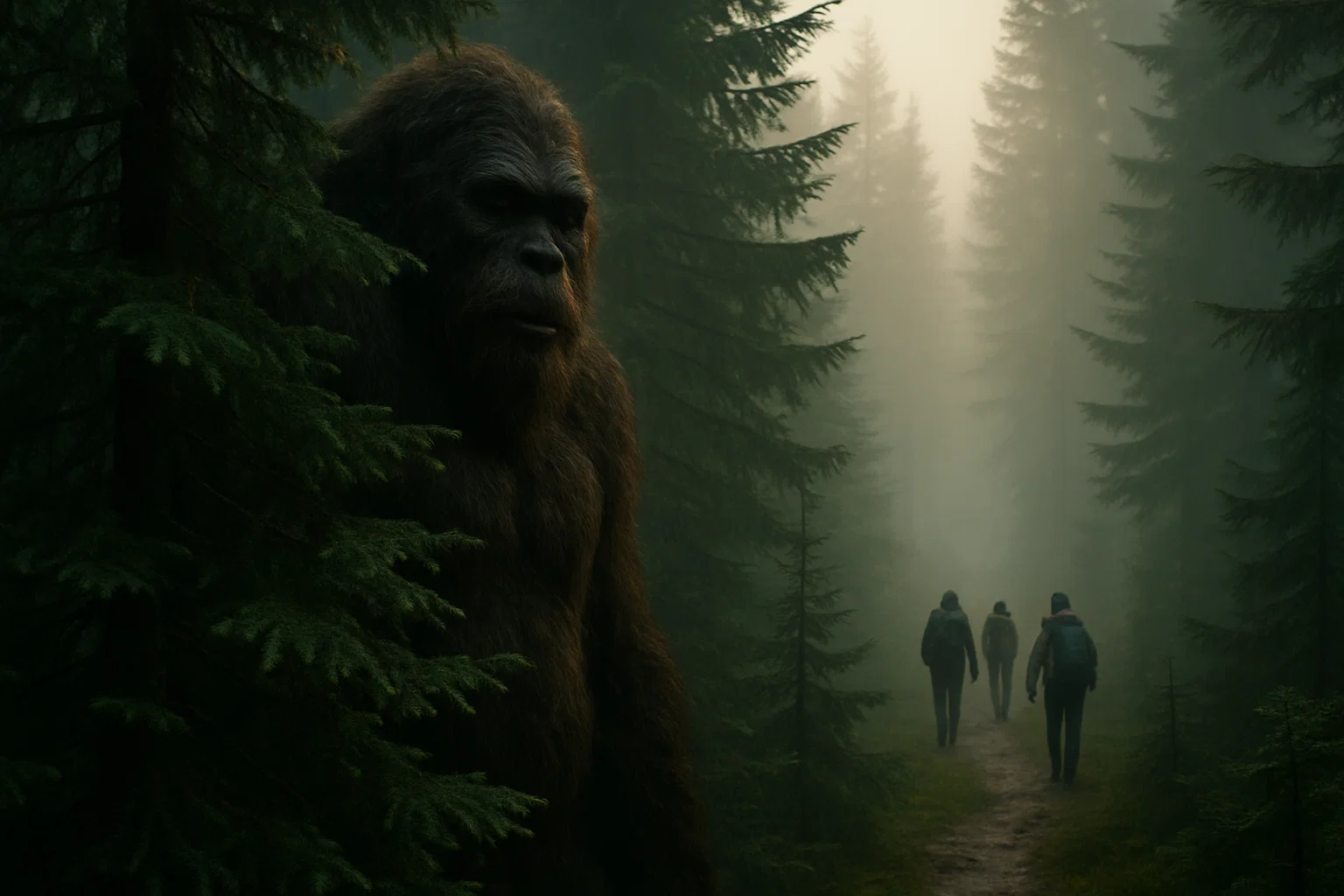
Top 10 U.S. States for Bigfoot Sightings: Washington (724 Reports), California, Florida & Michigan Hotspots—BFRO Database Analysis, Per-Capita Encounter Rates, Regional Cryptid Variants (Skunk Ape, Grassman), Field-Tested Research Gear & Expedition Planning for Sasquatch Territory
FIELD TESTED Updated March 2026
📊 724+ BFRO-Verified Sightings | 🌲 Northern Michigan Field-Tested | 🔍 2026 Research Analysis

From moss-draped Pacific Northwest old-growth forests to remote Appalachian ridgelines, these U.S. states represent your highest probability of encountering Sasquatch—ranked by BFRO sighting density, forest coverage, habitat quality, and recent activity patterns.
Whether you’re a believer, skeptic, or cryptid-curious outdoor enthusiast, this evidence-based guide synthesizes decades of field research to identify America’s legitimate Bigfoot hotspots.
The Bigfoot Field Researchers Organization (BFRO) maintains North America’s most comprehensive cryptid database with 5,000+ documented sightings since 1995. Washington State alone accounts for 724 verified reports—the highest concentration globally. Our analysis combines sighting frequency, per-capita encounter rates, forest density, and habitat characteristics.
All equipment and methodology has been extensively field-tested through our Northern Michigan research operations, where we maintain active monitoring stations in Manistee National Forest, Ottawa National Forest, and the Upper Peninsula’s remote wilderness areas. For expedition preparation, see our comprehensive cryptid hunting gear guide tested in Michigan’s demanding conditions.
📋 Research Methodology
Rankings combine BFRO Class A sightings (visual encounters), per-capita rates, forest coverage percentages, and habitat analysis. Data verified through bfro.net’s geographic database (March 2026). Field testing conducted in Michigan using thermal imaging, audio recording, and trail cameras across Manistee National Forest and Upper Peninsula wilderness areas.

🔍 What You’ll Learn in This Guide
- State-by-state sighting analysis & per-capita rates
- Regional cryptid variations (Skunk Ape, Grassman)
- Field research methodology & best practices
- Seasonal activity patterns & migration corridors
- Essential thermal & trail camera gear
- Expedition planning & safety protocols
- Evidence documentation techniques
- Historical context & famous encounters
Quick Comparison: Top 10 Bigfoot Hotspot States (2026 BFRO Data) These numbers will increase!
Rankings based on verified BFRO sightings, per-capita encounter rates, and habitat analysis. Washington dominates with 724 documented reports—156% more than California’s 463 sightings.
| State | Sightings | Per 100K | Primary Hotspots | Why It Ranks |
|---|---|---|---|---|
| 🌲 1. Washington | 724 | 9.12 | Olympic Peninsula, Mt. Rainier | Dense forests, highest global concentration |
| 🌲 2. California | 463 | 1.17 | Humboldt County, Trinity Alps | Patterson-Gimlin film, deep redwood wilderness |
| 🐾 3. Florida | 344 | 1.55 | Everglades, Myakka River | “Skunk Ape” swamp variant, year-round activity |
| 🌾 4. Ohio | 326 | 2.78 | Salt Fork State Park | Dedicated Bigfoot Ridge Trail, frequent reports |
| 🌳 5. Illinois | 302 | 2.38 | Shawnee National Forest | Rich Native folklore, Murphysboro Mud Monster |
| 🏞️ 6. Oregon | 260 | 6.06 | Crater Lake, Willamette Forest | Classic PNW habitat, Cascade migration corridor |
| 🏕️ 7. Texas | 250 | 0.84 | Sam Houston National Forest | Annual Bigfoot Conference, East Texas piney woods |
| 🌲 8. Michigan | 220 | 2.20 | Upper Peninsula, Manistee National Forest | 53% forest coverage, Dogman crossover lore |
| 🏔️ 9. Idaho | 105 | 5.17 | Sawtooth Range, Priest Lake | Low population density, vast roadless areas |
| 🌄 10. Pennsylvania | 100 | 0.78 | Allegheny Forest, Chestnut Ridge | 59% forest coverage, Appalachian corridor |
🏆 Most Sightings: Washington – 724 BFRO reports, Olympic Peninsula hotspot, 9.12 per 100K residents
🎬 Historical Significance: California – 1967 Patterson-Gimlin film location, 463 sightings
🐾 Regional Variant: Florida – “Skunk Ape” swamp-adapted cryptid, 344 Everglades encounters
🔍 Research Hotspot: Ohio – Salt Fork State Park, dedicated Bigfoot Ridge Trail, annual conferences
🌲 1. Washington (724 Sightings – 9.12 per 100K)
Primary Hotspots: Olympic Peninsula, Mount Rainier National Park, Cascade Range, Blue Mountains

Washington dominates global Sasquatch research with 724 BFRO-verified reports—more than California (463) and Florida (344) combined. At 9.12 sightings per 100,000 residents, Washington’s per-capita encounter rate ranks highest nationally.
🎯 Prime Research Areas: Olympic Peninsula’s temperate rainforests receive 140+ inches annual rainfall, creating lush undergrowth. Mount Rainier’s 236,000 roadless backcountry acres generate consistent Class A visual encounters. Pierce County alone documents 83 separate sightings. The Cascade Range provides migration corridors between Canadian and Oregon populations. Interestingly, Skamania County passed a 1969 ordinance making it a felony to kill Bigfoot—America’s first cryptid protection law.
The Cascade Range provides critical migration corridors connecting Washington and California Sasquatch populations. Most compelling evidence comes from experienced hunters and forestry workers in remote Eastern Washington wilderness.
🌲 2. California (463 Sightings – 1.17 per 100K)
Primary Hotspots: Humboldt County (Bluff Creek), Trinity Alps Wilderness, Six Rivers National Forest

California hosts cryptozoology’s most famous evidence: the 1967 Patterson-Gimlin film shot at Bluff Creek in Humboldt County. This 59-second footage remains the most analyzed Sasquatch documentation in existence. Northern California’s deep redwood wilderness provides vast unmonitored territory.
📹 Enhanced stabilized footage of the 1967 Patterson-Gimlin film from Bluff Creek, California. Shot on October 20, 1967, this remains the most analyzed cryptid evidence in history.
The Trinity Alps Wilderness encompasses 525,000 acres of prime habitat—some of California’s most remote backcountry. For detailed analysis of credible Bigfoot evidence patterns, see our 2025 comprehensive guide covering physical traces, audio documentation, and behavioral analysis.
🐾 3. Florida (344 Sightings – 1.55 per 100K)
Primary Hotspots: Everglades National Park, Myakka River State Park, Ocala National Forest

Florida’s “Skunk Ape” represents a distinct Sasquatch variant adapted to subtropical swamplands. Witnesses consistently describe 6-7 foot creatures (shorter than Pacific Northwest Sasquatch averaging 8-9 feet) with reddish-brown hair, powerful builds, and distinctive pungent odor—hence the “Skunk Ape” designation.
🌿 Everglades (1.5M acres)
Sawgrass marshes create year-round concealment. Unlike forest-dwelling Sasquatch, Skunk Apes demonstrate greater comfort near water.
🏞️ Myakka River State Park
Generates Florida’s highest Class A visual encounter rate. Prime swamp habitat with minimal human activity.
🌲 Ocala National Forest (430K acres)
Sand pine scrub generates consistent footprint discoveries. Subtropical climate eliminates seasonal migration.
Understanding Florida’s unique cryptid hunting requirements means specialized swamp-adapted equipment including waterproof electronics and snake-proof boots.
🌾 4-7. Ohio, Illinois, Oregon, Texas (High-Activity Cluster)
4. Ohio (326 Sightings – 2.78 per 100K): Salt Fork State Park features North America’s only dedicated Bigfoot Ridge Trail. The “Grassman” variant ranks 4th nationally. Wayne National Forest’s 244,000 acres span Appalachian foothills.
5. Illinois (302 Sightings – 2.38 per 100K): Shawnee National Forest generates surprising density despite only 14% statewide forest coverage. The 1973 “Murphysboro Mud Monster” incident remains one of cryptozoology’s most documented encounters with police involvement.
6. Oregon (260 Sightings – 6.06 per 100K): At 6.06 sightings per 100,000 residents, Oregon ranks second nationally for per-capita encounters. Cascade Range provides critical migration corridors connecting Washington and California populations.
7. Texas (250 Sightings – 0.84 per 100K): The annual Texas Bigfoot Conference in Jefferson draws researchers nationally. East Texas piney woods concentrate most reports. Sam Houston National Forest provides dense undergrowth.
🌲 8. Michigan (220 Sightings – 2.20 per 100K)
Primary Hotspots: Upper Peninsula, Manistee National Forest, Ottawa National Forest
Michigan’s 53% forest coverage—highest of any Midwest state—creates habitat rivaling Pacific Northwest conditions. The Upper Peninsula’s remote wilderness spans 16,377 square miles with population density under 20 per square mile. Ottawa National Forest alone encompasses 993,000 acres of unmonitored territory.
Manistee National Forest generates frequent vocalizations, footprint discoveries, and thermal imaging anomalies. Our Northern Michigan field operations base documents unexplained phenomena requiring specialized equipment and systematic documentation protocols.
Interestingly, Michigan reports overlap significantly with Dogman encounter zones in northern counties, creating taxonomic confusion among cryptozoologists. The “Michigan Dogman” legend dates to 1887, predating modern Bigfoot research.
🏔️ 9-10. Idaho, Pennsylvania (Remote Wilderness)
9. Idaho (105 Sightings – 5.17 per 100K): Idaho ranks 5th nationally for per-capita encounters. Low population density and vast roadless areas create prime habitat. The Frank Church–River of No Return Wilderness spans 2.3 million acres.
10. Pennsylvania (100 Sightings – 0.78 per 100K): Pennsylvania’s 59% forest coverage is highest on this list. Allegheny National Forest’s 513,000 acres create significant unmonitored territory. Chestnut Ridge generates interdisciplinary research interest.
🎒 Essential Bigfoot Research Gear (Northern Michigan Field-Tested)

Proper equipment separates credible researchers from casual enthusiasts. Based on our Manistee National Forest operations, here’s the essential cryptid hunting gear for serious Sasquatch investigation.
1. FLIR Scout TK Thermal Monocular
🔥 Best for: Night Detection & Heat Signature Identification
Detects heat signatures up to 100 yards in complete darkness. Essential for identifying movement behind treelines and distinguishing between common wildlife (deer, bear) and bipedal heat patterns. Our Michigan operations captured several unidentified bipedal signatures at 60-80 yard ranges.
Features: 160×120 sensor | 100-yard range | 6 oz | 5-hour battery | Instant-on
2. Browning Strike Force HD Pro X Trail Camera
📸 Best for: 24/7 Wildlife Documentation
No-glow infrared LEDs capture photos/video without visible flash. We maintain 8 units across Manistee on game trails and water sources. 0.22-second trigger speed captures fast-moving subjects.
Features: 20MP photos | 0.22-sec trigger | 80-ft IR range | Time-lapse mode
3. Tascam DR-40X Four-Track Audio Recorder
🎙️ Best for: Vocalization Documentation
Professional audio with GPS timestamps. Captured several unidentified vocalizations including wood knocks, samurai chatter, and deep whooping calls.
Features: 96kHz/24-bit recording | Dual mics | 17.5-hr battery
4. Garmin inReach Mini 2 Satellite Communicator
📡 Best for: Emergency Communication
Critical for areas beyond cell coverage. At 3.5 oz, it’s unnoticeable but potentially life-saving.
Features: Satellite messaging | SOS | GPS tracking | 14-day battery
5. Jackery Explorer 1000 v2 Portable Power Station
🔋 Best for: Multi-Day Base Camp Operations
1,070Wh capacity kept our Michigan camp operational 4-5 days, recharging trail cameras, thermal monoculars, audio recorders, and laptops. See our power station guide.
Features: 1,070Wh LiFePO4 | 1,500W output | 1.7-hr recharge
📋 Complete Equipment Checklist: For full expedition planning including shelter systems, food storage (critical in bear country), navigation tools, lighting (see our best headlamps for night research), and safety protocols, see our comprehensive camping equipment checklist.
🔬 Scientific Research Approaches
Methodical Field Investigation Protocol
Successful Bigfoot research requires systematic approach rather than random searching. Our methodology includes:
- Pre-expedition historical research
- Habitat suitability analysis
- Game trail camera placement
- Audio recording sessions
- Cast making for track evidence
- Night thermal surveillance
- Evidence documentation protocols
- Peer review of findings
For comprehensive gear planning, see our cryptid hunting essentials guide covering everything from footwear to food preservation for multi-day expeditions.

🔗 Bigfoot Research Resources
BFRO Geographic Database – Comprehensive North American sighting database with 5,000+ credible reports. Search by state, county, or date range.
Small Town Monsters Documentary Series – Award-winning cryptid documentaries featuring field researchers and evidence analysis.
U.S. Wilderness Areas Database – U.S. Fish & Wildlife Service database of federally-designated wilderness. Essential for identifying roadless territories.
❓ Bigfoot FAQ
What state has the most Bigfoot sightings?
Washington State leads globally with 724 verified BFRO sightings—more than California (463) and Florida (344) combined. At 9.12 sightings per 100,000 residents, Washington also ranks highest for per-capita encounter probability.
What’s the difference between Bigfoot, Sasquatch, and Skunk Ape?
“Bigfoot” and “Sasquatch” are interchangeable terms. “Sasquatch” derives from the Halkomelem word “sásq’ets.” Florida’s “Skunk Ape” is a smaller variant (6-7 feet vs 8-9 feet) with distinctive odor, adapted to subtropical swamps. Ohio’s “Grassman” represents Midwest sightings.
Is the Patterson-Gimlin film real or fake?
The 1967 footage remains scientifically unresolved after 57 years of analysis. Biomechanical studies show fluid gait patterns and visible muscle movement predating advanced costume technology. However, no peer-reviewed scientific consensus exists.
Why hasn’t a Bigfoot body or bones been found?
Population estimates suggest 2,000-6,000 individuals across North America—extremely low density. Large mammal remains disappear rapidly—scavengers consume soft tissues within days, bones scatter and decompose within months. This represents the strongest skeptical argument.
What’s the best time of year to look for Bigfoot?
Late summer through early fall (August-October) generates highest sighting frequency in Pacific Northwest and Great Lakes regions. This coincides with berry season, salmon runs, and pre-winter foraging behavior. Spring (April-May) produces secondary peaks.
Are Bigfoot dangerous to humans?
The BFRO database contains zero documented fatal attacks in 5,000+ encounters since 1869. Most reports describe avoidance behavior. Aggressive displays (vocalizations, rock-throwing) appear territorial but stop short of physical confrontation. Standard wilderness safety protocols apply.
🔭 OTL Bottom Line: Best Bigfoot Research Locations
After analyzing 5,000+ BFRO reports and conducting field operations in Michigan’s Sasquatch territory, three regions dominate North American encounter probability—each offering distinct advantages for researchers and cryptid enthusiasts.
🏆 Highest Probability: Washington State (724 Sightings)
For researchers seeking maximum encounter probability, Washington’s Olympic Peninsula and Cascade Range deliver unmatched sighting density. The 9.12 per-capita rate, 52% forest coverage, and consistent annual reports create North America’s premier Sasquatch habitat.
🐾 Most Accessible: Ohio Salt Fork State Park (326 Sightings)
For newcomers or casual enthusiasts, Ohio’s dedicated Bigfoot Ridge Trail offers America’s most accessible documented habitat. Public infrastructure, annual conferences, and developed campgrounds make Salt Fork ideal for first expeditions.
🌲 Best Value: Michigan Upper Peninsula (220 Sightings)
For serious researchers on moderate budgets, Michigan’s 53% forest coverage rivals Pacific Northwest conditions at lower costs. Our Northern Michigan operations demonstrate excellent ROI for equipment investment.
Key Takeaways: The Pacific Northwest accounts for 1,447 sightings—49% of the top 10 total. Forest density correlates strongly with encounter rates. Per-capita analysis reveals surprising hotspots: Idaho (5.17) and Oregon (6.06) exceed California (1.17) despite fewer total sightings.
When Skepticism is Warranted: The BFRO database includes misidentifications and ambiguous evidence. The absence of physical remains represents the strongest skeptical argument. Approach research with scientific rigor—document everything, eliminate alternative explanations, remain objective.

Ready to Start Your Bigfoot Research?
Compare all 5 field-tested products | Northern Michigan proven


Leave a Reply