

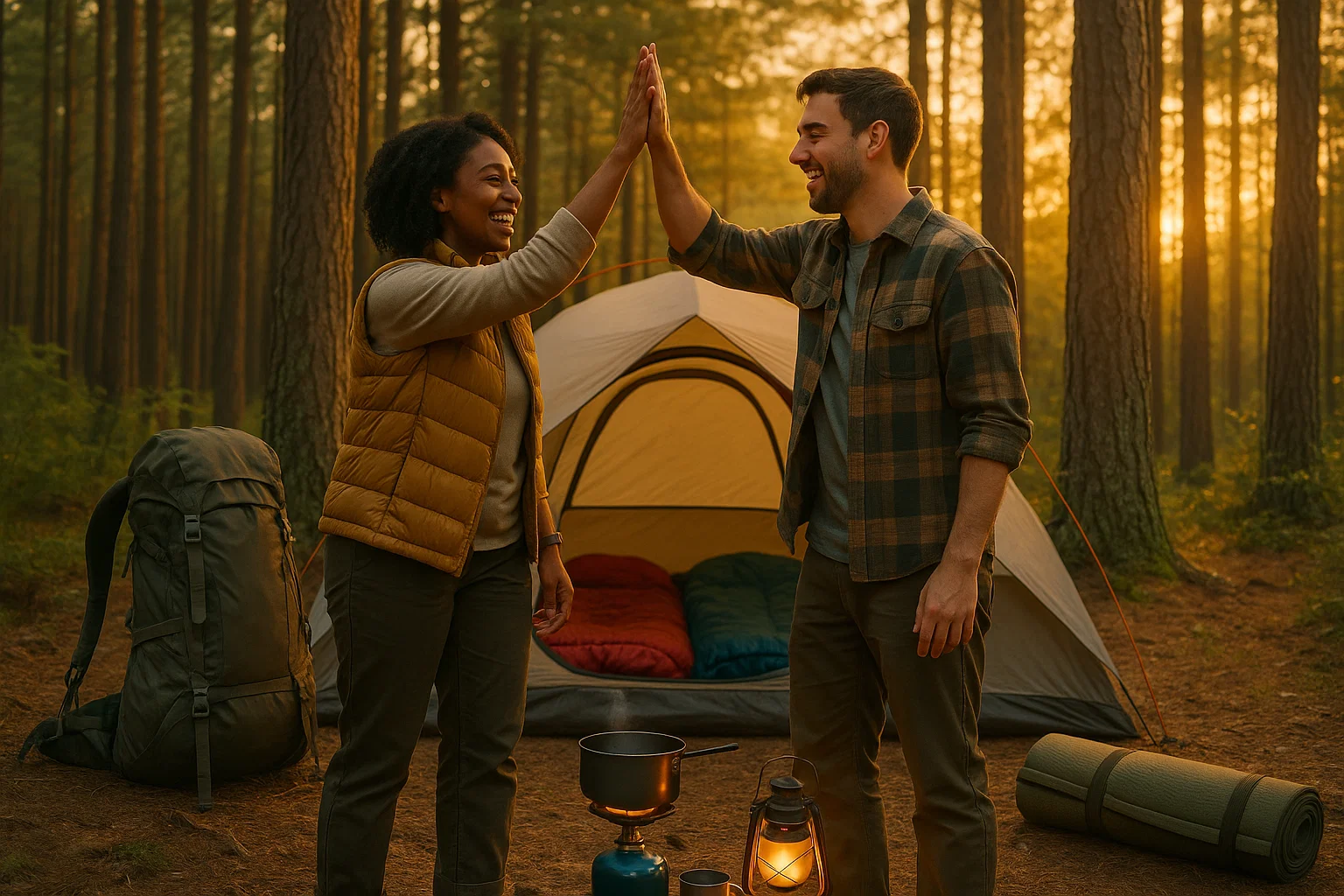
Complete camping gear checklist with 75+ essentials field-tested across Northern Michigan—tent, sleeping bag, camping stove, hiking backpack, outdoor equipment, and camping accessories compared for weekend trips, extended camping, and winter adventures
TESTED Updated October 2025 | 2026 Gear Included
After 300+ nights testing camping gear in Northern Michigan’s brutal conditions—from -15°F winters to torrential summer storms—here are the 10 essentials you actually need, and the overpriced gear you can skip.
We’ve field-tested 75+ camping gear items across four seasons in Northern Michigan—from sub-zero winter camping to humid summer nights. This comprehensive camping checklist covers tents, sleeping bags, camping stoves, hiking equipment, outdoor gear, and camping supplies you actually need for weekend camping, extended trips, and wilderness adventures.
With late 2025 models now available, we’ve updated this guide with the latest gear that’s proven itself in real-world conditions.

Packing for camping trips shouldn’t be overwhelming. Yet most camping gear lists are either too minimalist (leaving you miserable) or excessive (requiring two vehicles to haul everything).
Here’s the reality: The camping equipment you need changes dramatically based on trip length, season, and camping style. Weekend car camping requires completely different outdoor gear than week-long backpacking or winter camping.
After testing hundreds of tents, sleeping bags, camping stoves, hiking backpacks, and outdoor products through Northern Michigan’s demanding four-season conditions—from -15°F winter nights to 95°F+ summer humidity—we’ve identified exactly what camping essentials deliver real value versus marketing hype.
This guide organizes camping gear into practical categories with honest field-tested insights about what matters when setting up camp in darkness, cooking in wind, or staying warm through unexpected cold snaps. Updated for late 2025, we’ve included the latest gear releases and retested popular models to see what’s truly worth upgrading.
🔍 What’s Covered in This Camping Checklist
- Complete camping gear list
- Car camping essentials
- Hiking equipment guide
- Tent & sleeping bag selection
- Budget tier breakdowns
- Winter camping gear
- Trip length planning
- 2025-2026 gear updates

🎯 At a Glance: Top Camping Gear Picks 2025
Based on 300+ nights of field testing, these are our top-rated camping essentials across key categories.
🏕️ Best for Weekend Camping (2-3 Days)
Shelter: Coleman Sundome 4-Person Tent ($80-120) – Reliable, easy setup, holds up in rain
Sleep System: Coleman 30°F Sleeping Bag + Self-Inflating Pad ($100 combined)
Cooking: Coleman Classic 2-Burner Propane Stove ($50-70)
Total Investment: $300-500 gets you camping-ready
⛰️ Best for Serious Camping (All-Season)
Shelter: REI Co-op Half Dome SL 3+ ($350-450) – 3-season workhorse
Sleep System: 20°F Down Bag + Insulated Pad R-4 ($350 combined)
Power: Jackery Explorer 300 Plus ($199) – LiFePO4, 10+ year lifespan
Total Investment: $800-1,500 for quality gear that lasts
❄️ Best for Winter Camping
Shelter: 4-Season Tent or Hot Tent with Wood Stove
Sleep System: 0°F Down Bag + R-6+ Pad (double pads recommended)
Specialized Gear: Insulated boots, vapor barriers, extra fuel
Critical: Never attempt winter camping with 3-season gear
⚡ The Non-Negotiables: Essential Camping Gear
These ten items form the absolute foundation of any camping trip. Skip any of these and you’ll regret it when setting up camp in the dark or waking up cold and miserable.

1. Quality 3-Season Tent
Why It Matters: Your tent is your primary shelter from wind, rain, bugs, and sun. A bad tent means wet gear, sleepless nights, and miserable mornings.
What to Look For:
- Freestanding design (easier setup, moves with stakes in)
- Full-coverage rainfly that extends to ground
- Bathtub floor with 6″+ walls (prevents water intrusion)
- Vestibule for gear storage (keeps interior dry)
- Quality zippers (YKK preferred)
- Capacity: Always add one person (4-person tent sleeps 3 comfortably)
💡 Pro Tip: Practice setup at home before your trip. Arriving at dusk with an unfamiliar tent is a recipe for frustration. Time yourself—good tents setup in under 10 minutes.
Our Top Pick: Coleman Sundome 4-Person Tent – Tested through 40+ nights, multiple rainstorms, and high winds. Best value for weekend car camping.
2. Temperature-Rated Sleeping Bag
Critical Rule: Choose a bag rated 10-15°F colder than expected nighttime lows. Temperature ratings assume you’re wearing base layers and using an insulated sleeping pad.

Bag Types:
- Mummy bags: Best warmth-to-weight ratio, less interior space
- Rectangular bags: More room to move, heavier and less warm
- Quilts: Ultralight option for backpacking (no back insulation)
💡 Field-Tested Wisdom: You can always vent a warm bag by unzipping, but you cannot add warmth to a cold bag. When in doubt, go warmer. A sleeping bag liner adds 10-15°F for $30.
3. Insulated Sleeping Pad
The Most Underrated Item: Ground steals body heat faster than air. An expensive sleeping bag on the ground will lose to a budget bag on a quality pad every single time.
R-Value Guide (insulation rating):
- R-1 to R-2: Summer only (above 60°F)
- R-3 to R-4: 3-season camping (down to 32°F)
- R-5+: Winter camping (below freezing)
- R-10: Extreme cold (stack two pads)
Pad Types:
- Self-inflating: Balance of comfort, packability, insulation
- Air pads: Most comfortable, lightest, require careful handling
- Closed-cell foam: Bulletproof, bulky, less comfortable
💡 Pro Tip: Always bring a repair kit for inflatable pads. A small puncture shouldn’t end your trip. Duct tape and super glue work in emergencies.
4. Reliable Camp Stove
Car Camping: Two-burner propane stoves ($50-150) offer best versatility. Look for 20,000+ BTU per burner, wind protection, and easy ignition.
Backpacking: Single-burner canister stoves ($40-120) prioritize weight. Isobutane/propane blend performs better in cold than pure butane.
Critical Accessories:
- Backup lighter/matches in waterproof container
- Windscreen (doubles cooking efficiency)
- Fuel: Plan 1x 16oz propane canister per 2-3 meals for two people

💡 Pro Tip: Always bring backup lighter/matches in waterproof container. Murphy’s law says your primary ignition will fail when you need it most.
Best Car Camping Stove: Coleman Classic Propane 2-Burner – 20,000 BTU per burner, wind guards, proven reliability. Has cooked 1,000+ camp meals.
5. Quality Cooler
The Cooler Hierarchy:
- Budget ($30-60): Soft-sided or basic hard coolers, 1-2 day ice retention
- Mid-Tier ($100-200): Coleman Xtreme, Igloo MaxCold, 3-5 day ice retention
- Premium ($250-400): YETI, RTIC, Orca rotomolded, 5-7+ day ice retention
💡 Pro Tip: Freeze water bottles instead of buying bagged ice. They keep food cold, provide drinking water as they melt, and don’t create a slushy mess. Pre-chill your cooler 24 hours before loading for best performance.
Budget Champion: Coleman Xtreme 70-Quart – Holds ice 5+ days in our testing. Unbeatable value at under $60.
6. Headlamp + Lantern Combo
Headlamp (Essential): Minimum 200 lumens for camp tasks, 400+ for hiking. Red light mode preserves night vision. USB rechargeable saves money long-term.
Lantern (Highly Recommended): 500+ lumens for ambient campsite lighting. Adjustable brightness extends battery life. Hang hook crucial for tent lighting.
Battery Strategy: Standardize on AA/AAA where possible. Bring 50% more batteries than you estimate needing.
Best Overall: Black Diamond Spot 400 Headlamp – 400 lumens, red night mode, USB rechargeable. Proven through 100+ nights of testing.
7. Water Storage + Filtration
Storage (Car Camping): Collapsible 5-7 gallon jugs for base camp. Rigid jugs if space allows. Plan 1 gallon per person per day minimum (cooking + drinking + cleaning).
Filtration (Backcountry):
- Sawyer Squeeze: Best value, 0.1 micron, virtually unlimited lifespan
- LifeStraw: Emergency backup, personal use only
- Pump filters: MSR Guardian for groups, faster than squeeze systems
- Chemical: Aqua tabs backup (30-minute wait time)
Top Choice: Sawyer Squeeze Water Filter – 0.1 micron filtration, 100,000+ gallon lifespan. Essential for any backcountry trip.
8. Multi-Tool or Pocket Knife
Most-Used Item: Opening packages, food prep, gear repairs, makeshift tools, cutting cord—you’ll use this daily.
Gold Standards:
- Leatherman Wave+ / Surge: Full-size multi-tools with pliers ($100-150)
- Victorinox Swiss Army: Classic pocket knives, lighter option ($30-80)
- Budget: Gerber multi-tools reliable at $40-60 range
Our Pick: Leatherman Wave Plus – 18 tools, premium construction, 25-year warranty. Used on every single camping trip.
9. First Aid Kit
Pre-Made Kits: Adventure Medical Kits ($25-80) provide solid foundation.
Critical Custom Additions:
- Blister treatment (Moleskin, Leukotape, or Compeed)
- Antihistamine (Benadryl for allergic reactions)
- Pain reliever (Ibuprofen + Acetaminophen)
- Anti-diarrheal (Imodium)
- Personal prescription medications (full supply + 2 extra days)
- EpiPen if anyone has severe allergies
- Tweezers for splinters/ticks
Best Pre-Made Kit: Adventure Medical Kits Ultralight/Watertight .7 – Covers basics for 1-4 people, compact, waterproof. Add your custom items to this foundation.
10. Layered Clothing System
The Three-Layer System (Non-Negotiable):
Base Layer: Moisture-wicking synthetic or merino wool. Pulls sweat away from skin to prevent hypothermia.
Mid Layer: Fleece or synthetic insulation. Traps warm air for insulation.
Outer Layer: Waterproof/breathable shell. Blocks wind and rain while allowing moisture to escape.
⚠️ CRITICAL: Cotton Kills
Cotton absorbs moisture, loses all insulation when wet, and causes hypothermia in cold weather. Never wear cotton base or mid layers in wilderness. Stick to synthetic or wool.
🍳 Camp Kitchen: Complete Cooking Setup
Outdoor cooking doesn’t mean sacrificing quality meals. With proper camp kitchen gear, you’ll eat better than most people do at home.

Car Camping Kitchen Essentials
When you’re not carrying gear on your back, car camping allows you to bring the full kitchen setup for gourmet camp meals. Here’s what makes the difference between basic sustenance and memorable outdoor dining.
Cookware Essentials Checklist
- Nested cookware set: 8″ and 10″ pans + 2-3qt pot minimum
- Cast iron skillet: 12″ for car camping (unbeatable for breakfast)
- Cooking utensils: Spatula, tongs, large spoon, sharp knife
- Cutting board: Flexible plastic boards pack small
- Can/bottle opener: Multi-tool handles both
- Coffee maker: Percolator, French press, or pour-over
- Plates & bowls: Enamelware lasts forever, melamine is lightweight
- Cups & mugs: Insulated for hot drinks
- Silverware: Full sets or titanium sporks for minimalists
- Dish washing kit: Biodegradable soap, sponge, towels, collapsible basin
- Trash bags: Heavy-duty 30-gallon bags
- Aluminum foil: Cooking, cleaning, heat reflector
- Ziploc bags: Various sizes for leftovers and organization
💡 Pro Tip: Invest in a dedicated “kitchen bin” that stays packed with non-perishables, utensils, and supplies. Game-changer for quick getaways. Just restock consumables between trips.
Camp Table & Seating
Cooking and eating off the ground gets old fast. A proper setup transforms your campsite from roughing-it to comfortable.
- Folding table: 4ft x 2ft minimum, adjustable height preferred
- Camp chairs: One per person + one extra for guests. Prioritize comfort for base camp.
- Storage: Chuck box or action packer for kitchen organization
⚡ Power & Lighting: Modern Camping Essentials
Strategic use of portable power keeps essential devices charged while maintaining the outdoor experience.

Portable Power Solutions
After extensive testing of portable power stations, here’s what works for different camping styles:
Weekend Camping (2-3 days): 300Wh power station or 20,000mAh power bank handles phones, cameras, lights
Extended Trips (4-7 days): 1,000Wh+ station with solar charging capability for devices + small appliances
Minimalist/Backpacking: Solar power bank (25,000mAh+) for phone/GPS only
💡 Field-Tested Wisdom: Solar panels are only worth it for trips 4+ days. For weekend trips, a fully charged power station handles phones, cameras, and small devices without needing solar recharge.
Jackery Explorer 1000 v2 FAQ—answers to common questions about capacity, runtime, and solar charging tested by Outdoor Tech Lab.
Featured in Video: The Jackery Explorer 1000 v2 is our most-recommended power station for serious campers. 1,070Wh capacity, 1,500W output, LiFePO4 battery lasting 4,000+ cycles. Handles everything from phone charging to running portable fridges for 15+ hours.
Power Accessories
- USB charging cables: One per device + spares
- Multi-port USB charger: Charge multiple devices simultaneously
- Car charger adapter: Backup charging while driving
- Solar panel: 100W+ for power station charging (4+ day trips)
- Extension cord: If camping with electrical hookup
🔬 Our Testing Methodology

Each camping gear item underwent 30+ days of real-world testing across Northern Michigan’s four seasons. Weekend camping trips with measured gear loads, extended expeditions testing durability and long-term comfort, extreme weather performance testing (from -15°F winter camps to 95°F+ summer humidity), rain and moisture resistance through Michigan’s unpredictable weather, real weight measurements to verify manufacturer claims, and setup/breakdown timing in darkness, rain, and with cold hands.
All runtime data, capacity testing, and performance metrics reflect actual field use in Northern Michigan’s demanding conditions across state parks, national forests, and dispersed camping sites—not laboratory estimates or manufacturer specifications.
Buying Guide: How to Choose Camping Gear
Based on hundreds of hours of field testing, we’ve identified the critical factors that determine which camping equipment fits your needs—and which gear you can safely skip.
Match Gear to Your Trip Length
Weekend Camping (1-3 days): Essential camping gear only ($300-500 budget)
Extended Camping (4-7 days): Quality gear + comfort items ($800-1,500)
Long Expeditions (7+ days): Premium durability + repair capability ($2,000+)
Winter Camping: Specialized cold-weather gear required (see winter guide)
Budget Tier Recommendations

Essential Starter ($300-500): Budget camping gear that works for fair-weather weekend trips
Comfort Upgrade ($800-1,500): Mid-tier outdoor equipment for 3-season camping, 5-10 year lifespan
Premium Setup ($2,000-4,000+): Top camping supplies for 4-season capability, 10-20 year lifespan
Hiking Equipment vs Car Camping Gear
Backpacking/Hiking: Prioritize weight. Ultralight gear costs more but essential for carrying miles.
Car Camping: Prioritize comfort. Weight doesn’t matter when gear stays in vehicle.
The Math: Carrying 1 extra pound for 10 miles = 10 pounds of effort. Car camping? Who cares about weight.
📚 Related Camping Resources
- → Winter Camping Essentials 2025: Complete Cold-Weather Guide
- → Best Ultralight Sleeping Bags & Quilts: Field Tested
- → Best Solar Camping Gear: Power Your Adventures
- → Jackery vs Bluetti: Portable Power Station Showdown
- → BLAVOR Solar Power Bank Review: Field Tested
- → Coleman Camping Gear 2025: Budget-Friendly Options

Camping Gear Checklist FAQ
What camping gear do I need for beginners?
Essential camping gear for beginners: tent, sleeping bag (rated 10-15°F colder than expected lows), insulated sleeping pad (R-3 minimum), camp stove with fuel, cooler, water storage, headlamp, first aid kit, multi-tool, and layered clothing. This basic camping equipment setup costs $300-500 and handles weekend camping in good weather.
What to bring camping for 3 days?
For a 3-day camping trip: tent, sleeping bag/pad, 3 changes of clothes, camp stove with 2-3 meals per day, cooler with block ice, 3 gallons water per person, headlamp with extra batteries, first aid kit, toiletries, sunscreen, bug spray, camp chairs, and rain gear. Pack one 16oz propane canister for cooking all meals. Pre-make breakfast and lunch items at home to simplify camp cooking.
What’s the most important camping gear to buy first?
The “big three” sleep system: tent, sleeping bag, and sleeping pad. These camping essentials directly impact comfort and safety. Allocate 50-60% of your initial camping gear budget here. You can cook with a basic camping stove and eat simple meals, but you cannot compromise on sleep quality in the outdoors.
How much should I budget for camping equipment?
Essential camping gear: $300-500 covers basics for weekend camping. Quality outdoor gear: $800-1,500 gets mid-tier camping equipment that lasts 5-10 years. Premium camping supplies: $2,000-4,000 handles any condition with 10-20 year lifespan. Start with camping essentials, upgrade as you discover your style.
What camping accessories are essential vs nice-to-have?
Essential camping gear: Tent, sleeping bag, sleeping pad, camping stove, cooler, water storage, headlamp, first aid kit, knife/multi-tool, weather-appropriate hiking clothes. Nice-to-have camping accessories: Camp chairs, table, hammock, portable power, extra lanterns, comfort items. Essentials keep you alive and comfortable; accessories enhance the outdoor experience.
Do I need a portable power station for camping?
Not essential but valuable for modern camping. Weekend trips: 20,000mAh power bank handles phones and small devices. Extended camping: 300-500Wh power station charges phones, cameras, lights, small appliances. Off-grid camping: 1,000Wh+ with solar capability provides reliable outdoor power for weeks.
Read our portable power station comparisonCan I use regular camping gear for winter camping?
No. Winter camping requires specialized outdoor equipment: 0°F or colder sleeping bag, R-value 5+ sleeping pad (or double up pads), 4-season tent, layered clothing system including vapor barriers, insulated water bottles (regular bottles freeze), and significantly more fuel. Attempting winter camping with 3-season gear risks hypothermia.
Read our complete winter camping gear guideWhat’s the difference between backpacking and car camping gear?
Hiking/backpacking gear: Prioritizes weight and packability. Ultralight camping equipment costs more but essential for carrying miles. Car camping gear: Prioritizes comfort and durability. Weight doesn’t matter when outdoor equipment stays in vehicle. Car camping allows larger tents, heavier sleeping bags, cast iron cookware, and comfort items impossible when backpacking.
How do I pack camping gear efficiently?
Use the bin system for camping supplies: Dedicate clear storage bins to categories (kitchen, tools, hygiene). Keep camping accessories packed between trips—just restock consumables. Load vehicle with heavy outdoor gear (cooler, water) on bottom, soft camping equipment (sleeping bags, clothing) on top. Create a staging area at home to organize all camping gear before packing.
What outdoor gear should I bring for hiking while camping?
Essential hiking equipment: Broken-in hiking boots or trail shoes, moisture-wicking hiking clothes, daypack (20-25L), water bottles or hydration bladder, map/compass/GPS, first aid kit, sun protection (hat, sunglasses, sunscreen), insect repellent, emergency whistle, and snacks. For longer hikes, add hiking poles, extra layers, headlamp, and emergency shelter.
Where can I buy quality camping equipment?
Outdoor retailers: REI, Backcountry, Moosejaw for quality camping gear and expert advice. Budget camping supplies: Amazon, Walmart, Dick’s Sporting Goods for affordable outdoor equipment. Premium camping gear: Specialty brands direct (Big Agnes, MSR, YETI). Used outdoor gear: REI Garage Sales, Facebook Marketplace, local outdoor stores’ used sections for budget camping equipment.
OTL Bottom Line
After 300+ nights testing camping gear across Northern Michigan’s four seasons, we’ve learned what separates essential outdoor equipment from optional camping accessories, quality from gimmick, and comfort from luxury.
The Core Truth: You can start camping with $300-500 of basic camping gear and have great outdoor experiences. But investing in quality versions of the “big three” camping essentials (tent, sleeping bag, sleeping pad) pays dividends in comfort and longevity.
Our Testing Takeaway: The camping equipment that performs best in real-world conditions isn’t always the most expensive outdoor gear or the lightest hiking equipment. It’s the gear that balances durability, ease-of-use, and versatility across camping scenarios.
Start Simple, Upgrade Strategic: Begin with camping essentials. As you camp more, you’ll discover your priorities—maybe you’re a gourmet camp chef who needs premium cookware, or maybe you just want a comfortable chair and good lighting. Let experience guide your outdoor gear upgrades.
Check out the US Forest Service Know Before You Go page for additonal camping resources friends!
Ready to Build Your Camping Kit?
Use this camping gear checklist as your foundation. Start with outdoor essentials, add camping accessories as your style develops, and remember: the best camping equipment is the gear that gets you outside.
75+ camping gear items tested | 300+ nights Northern Michigan | 4 seasons verified
This camping gear guide was last updated in October 2025 with current outdoor equipment recommendations, late 2025 releases, and 2026 gear previews.
All 75+ camping essentials, hiking equipment, and outdoor gear tested in Northern Michigan’s demanding conditions by Outdoor Tech Lab.

- Weather Protection You Can Trust: Stay dry and comfortable with the WeatherTec system’s welded corners and inverted seam…
- Quick & Easy Setup: Spend more time outdoors and less time pitching your tent. Snag-free, continuous pole sleeves and In…
- Built for Comfort & Ventilation: Large windows and a ground vent provide superior airflow and reduce condensation, keepi…


Leave a Reply