

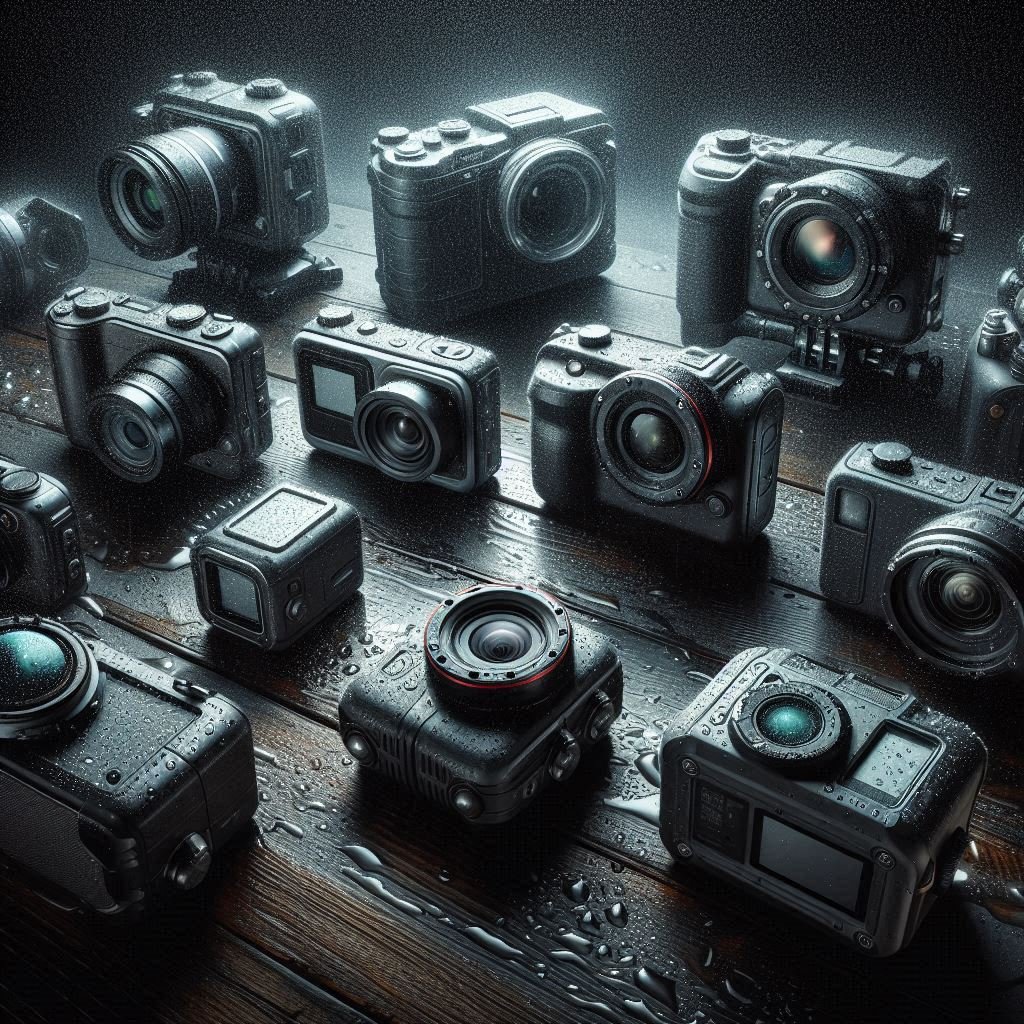
Field-Tested on Northern Michigan Rivers, Trails, and Open Water
Bottom Line Up Front: Whether you’re running helmet cam footage on Manistee National Forest two track, kayaking the Pere Marquette, surf fishing Lake Michigan’s west shore, or setting up remote wildlife surveillance in the UP, your action camera needs to survive full submersion — not just a rainstorm.
We evaluated 8 waterproof action cameras on depth rating, battery life, stabilization, and real-world image quality so you can make a confident buying decision.
From the DJI Osmo Action 6 Pro with 20m native waterproofing and class-leading low-light performance, to budget powerhouses like the AKASO EK7000 Pro with 131ft underwater capability, there’s a waterproof action cam here for every adventure level and budget.
The action camera market has pushed hard in 2026, with manufacturers competing on waterproofing depth, sensor size, and stabilization tech. After evaluating the full field, the DJI Osmo Action 6 Pro leads — but the gap to the competition is tighter than ever.
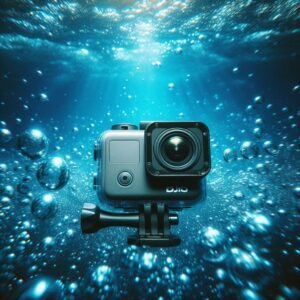
DJI Osmo Action 6 Pro — waterproof to 20m without a case
Here are the 8 best waterproof action cameras that excel in the most demanding conditions
1. DJI Osmo Action 6 Combo – Best Overall for Serious Adventurers
Why It’s Our Top Pick: The Action 6 boasts waterproofing to 20m without a case and excellent low-light image quality with a 1/1.3″ CMOS sensor.
What sets this DJI action camera apart is its solid battery life rated for up to 4 hours and excellent rugged credentials that hold up across seasons.
Perfect For: Kayakers, trail runners, and backcountry hikers who need a camera that keeps pace through rain, river crossings, and multi-day trips without babysitting it. The 64GB internal storage and 4-hour battery make it a genuine set-and-forget field camera for extended outdoor sessions.
Key Features:
- 4K 120fps video recording with 10-bit color
- Waterproof to 20m (66ft) without additional housing
- Enhanced low-light performance for dawn/dusk shooting
- Built-in 64GB storage plus microSD support
2. GoPro Hero 13 Black – The Feature-Rich Flagship
The Hero 13 Black remains the most complete GoPro action camera to date — same class-leading HyperSmooth stabilization as previous models, but with magnetic mounting and improved accessory detection built in.
Perfect For: Surfers, mountain bikers, and water sports enthusiasts who want the smoothest stabilization available. HyperSmooth handles aggressive movement that would ruin footage on almost any other camera at this price point. The magnetic mounting system is a genuine field upgrade over older locking mounts.
Key Features:
- 5.3K video at 60fps with 8:7 aspect ratio
- Magnetic mounting system with accessory detection
- Burst Slo-Mo mode at 400fps (720p)
- Waterproof to 10m (33ft) native, 60m with case
3. AKASO EK7000 Pro – Best Budget Option That Doesn’t Compromise
The EK7000 Pro delivers 4K/30fps, 1080P/60fps video and 20MP photos with a 2-inch IPS touch screen and Electronic Image Stabilization. At a fraction of flagship camera costs, it’s become the go-to pick for budget-conscious outdoor enthusiasts who still want legitimate waterproofing.
Perfect For: Trail hikers and paddlers who want real waterproofing without flagship pricing. The dual-battery setup is a genuine advantage on full-day floats where charging isn’t an option — you’re not cutting the trip short because your camera died at mile 8.
Key Features:
- 4K/30fps recording with Electronic Image Stabilization
- 2-inch touch screen with intuitive interface
- 131ft (40m) waterproof rating with included case
- Two rechargeable 1350mAh batteries included
4. Insta360 X4 – Best for 360° Documentation
The X4 offers 8K 360-degree video recording with removable lens guards and 135-minute battery life. The “shoot first, point later” AI reframing approach fundamentally changes how you capture fast-moving outdoor scenes — you never miss the critical moment because you were pointed the wrong direction.
Perfect For: Anglers, wildlife photographers, and backcountry filmmakers who need complete scene coverage without constantly repositioning the camera. Particularly effective for river kayaking where the action comes from every direction at once. The Invisible Dive Case rated to 50m opens up serious underwater capability.
Key Features:
- 8K 360° video at 30fps and 5.7K/60fps capability
- Waterproof to 10m native, optional dive case to 50m
- “Shoot first, point later” AI-powered reframing
- 72MP photos with 1/2″ sensor
5. Dragon Touch Vision 3 – Best Value with Premium Features
The Vision 3 features 4K/30fps recording, 20MP photos, and 100ft waterproof capability with a comprehensive accessories kit. Users consistently note the image quality punches well above its price bracket — this is a legitimate field camera, not a toy.
Perfect For: First-time action camera buyers who want professional-grade results without the flagship price commitment. The 18-piece mounting accessory kit covers most scenarios right out of the box — helmet, handlebar, chest mount, and more — so you’re not buying extras on day one.
Key Features:
- 4K/30fps video with 170° wide-angle lens
- 100ft (30m) waterproof depth rating
- Wireless remote control and WiFi connectivity
- 18-piece mounting accessories kit included
6. FLIR ONE Gen 3 – Best for Thermal Detection
While not a traditional action camera, the FLIR ONE Gen 3 offers 320×240 Super Resolution thermal imaging that attaches directly to your smartphone. It fills a capability gap that no standard action camera can — detecting heat signatures at dawn and dusk when visible-light cameras go essentially blind.
Perfect For: Wildlife researchers, hunters, and backcountry travelers who need to detect animal heat signatures in low-light conditions. Also genuinely useful for cryptid researchers running remote surveillance in dense forest environments where standard cameras miss activity entirely. Built to handle 1.5-meter drops and jobsite-level abuse.
Key Features:
- 320×240 thermal resolution with VividIR technology
- MSX technology blends thermal and visual images
- Temperature accuracy within ±3°C
- Compatible with iPhone 15+ and Android USB-C devices
7. AKASO Brave 4 – Reliable Mid-Range Performer
The Brave 4 delivers 4K/30fps video and 20MP photos with Electronic Image Stabilization and 131ft waterproof capability. The dual-screen design — 2″ rear and 0.96″ front — makes solo framing straightforward, which matters when you’re managing a camera mount on moving water or a trail bike.
Perfect For: Multi-day backcountry trips where you need reliable footage across changing conditions. The dual-battery system, adjustable field of view from 70° to 170°, and 131ft waterproof rating cover most scenarios from Lake Michigan beach shooting to UP river crossings without breaking the budget.
Key Features:
- 4K/30fps with 5x zoom capability
- 131ft waterproof rating with case
- Adjustable view angles from 70° to 170°
- Dual screens for accurate solo framing
8. IceFox Action Camera 4K – Best Ultra-Budget Option
The IceFox delivers 4K 60FPS recording and 20MP photos with Electronic Image Stabilization and 40-meter waterproof capability. Amazon reviewers consistently highlight the value-to-performance ratio — this is a capable camera at a price that makes running multiple units realistic.
Perfect For: Multi-angle setups where you need a capable second or third camera without doubling your budget. The comprehensive accessory kit includes multiple mounts, waterproof housing, and spare batteries — solid backup camera for guided trips or when you want simultaneous angles on the same run.
Key Features:
- 4K 60FPS video with 5x zoom
- 40-meter waterproof depth rating
- Two batteries and external microphone support
- App support for video and photo editing
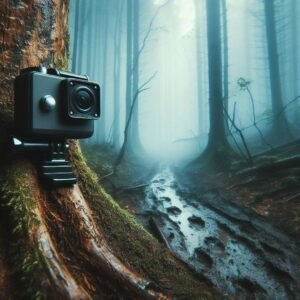
Remote trail surveillance — placement strategy matters as much as gear
Bonus Guide: Camera Placement for Trail and Wildlife Surveillance
Proper camera placement can make or break your documentation efforts — whether you’re monitoring wildlife corridors, setting up remote trail surveillance, or running trail camera setups for research. Here’s what field experience shows works best.
Height and Positioning
For most wildlife species, camera traps should be positioned between 30–60cm (1–2 feet) off the ground for ground-level animals, or 3–4 feet off the ground for a broader field of view that keeps the unit relatively inconspicuous. The right height depends on your target subject and terrain.
Strategic Locations
Focus on known wildlife corridors, areas near water sources, and natural paths of least resistance that animals follow. Trails, creek crossings, and terrain pinch points consistently produce the most activity. In the Manistee National Forest, saddles between ridges and beaver pond edges are particularly productive spots.
Detection Zone Optimization
Camera traps require both movement AND a change in ambient heat to trigger — they use passive infrared sensors that send out detection beams across a specific arc. Understanding that detection arc before you mount the unit saves you hours of reviewing empty footage. Position the camera perpendicular to the expected line of travel, not head-on.
Weather Considerations
Keep in mind that most trail cameras are weatherproof but not rated for full submersion — they handle rain, snow, and temperature swings but shouldn’t be submerged without proper housing. For power in cold conditions, lithium batteries work down to -40°F and last up to three times longer than alkaline in winter — worth the extra cost for any Northern Michigan deployment.
Security and Stealth
Use no-glow cameras if detection avoidance matters — standard low-glow cameras emit a faint red light that can alert wildlife or other people to the camera’s presence. Always secure your unit with a locking cable and consider natural camouflage to reduce theft risk and minimize animal disturbance.
Tips for Remote Wilderness Research
For remote wilderness deployments — including Bigfoot research and cryptid investigation — focus on dense forest areas, swampy lowlands, and mountainous terrain where sightings cluster. Since most nocturnal activity happens outside golden hour, infrared or low-glow capability is non-negotiable. Check cameras during rainy weather when possible to minimize scent disturbance at the site.
Quick Comparison Table
| Camera | Max Video | Waterproof | Battery | Best For | Amazon |
|---|---|---|---|---|---|
| DJI Osmo Action 6 | 4K 120fps | 20m native | 4 hours | Overall Best | 🛒 Check Price |
| GoPro Hero 13 Black | 5.3K 60fps | 10m native | 2+ hours | Premium Features | 🛒 Check Price |
| AKASO EK7000 Pro | 4K 30fps | 131ft w/case | 90 min x2 | Best Budget | 💰 Great Deal |
| Insta360 X4 | 8K 360° | 10m native | 135 min | 360° Coverage | 🌟 Innovative |
| Dragon Touch Vision 3 | 4K 30fps | 100ft w/case | 90 min x2 | Great Value | 💰 Great Deal |
| FLIR ONE Gen 3 | Thermal | Not rated | Phone battery | Thermal Detection | 🔥 Thermal |
| AKASO Brave 4 | 4K 30fps | 131ft w/case | 90 min x2 | Mid-Range | ⚡ Reliable |
| IceFox 4K | 4K 60fps | 40m w/case | 2 batteries | Ultra Budget | 💸 Steal |
Waterproof Action Cameras FAQ
Q: Which waterproof action camera has the best battery life?
A: The DJI Osmo Action 5 Pro leads the field at up to 4 hours of continuous recording. The AKASO EK7000 Pro and Brave 4 both include two 1350mAh batteries providing around 90 minutes each — that dual-battery system is a practical advantage when you can’t stop to charge mid-trip.
Q: Can these cameras really handle deep water?
A: Yes, but depth ratings vary significantly. The DJI Osmo Action 5 Pro is waterproof to 20m (66ft) without any case — the only camera on this list with that rating out of the box. The AKASO EK7000 Pro reaches 131ft (40m) with its included case. The Dragon Touch Vision 3 handles 100ft. Always verify your case seals are properly seated before submersion.
Q: Which camera is best for night and low-light recording?
A: The DJI Osmo Action 5 Pro excels in low-light with its larger 1/1.3″ sensor and dedicated low-light processing. For thermal detection in complete darkness, the FLIR ONE Gen 3 is in a different category entirely — it detects heat signatures when visible-light cameras see nothing.
Q: Are budget action cameras worth it?
A: For most outdoor use cases, yes. The Dragon Touch Vision 3 and AKASO EK7000 Pro deliver legitimate 4K footage and real waterproofing at a fraction of flagship pricing. Where budget cameras fall short is low-light performance and stabilization — if those matter to your use case, step up to DJI or GoPro.
Q: How often should I check trail cameras?
A: At minimum two weeks between checks for remote surveillance setups. Cameras in high-disturbance locations like active game trails or bedding areas should be checked even less frequently. Check during rainy weather when possible — it helps mask your scent at the site and reduces animal avoidance.
Q: What’s the difference between weatherproof and waterproof?
A: Weatherproof cameras handle rain, snow, and temperature extremes but cannot be submerged. Waterproof cameras like those on this list are rated for full submersion to their stated depth. The rating only applies when cases are properly sealed — always inspect O-rings and gaskets before water use.
Q: Which camera is best for capturing fast-moving subjects?
A: The GoPro Hero 13 Black offers industry-leading HyperSmooth 6.0 stabilization and Burst Slo-Mo at 400fps (720p) for analyzing fast movement in detail. The DJI Osmo Action 5 Pro’s RockSteady 3.0+ is also excellent — both handle aggressive motion that would produce unusable footage on budget options.
Q: Do I need special memory cards for 4K recording?
A: Yes. Use Class 10 / UHS Speed Class 3 (U3) microSD cards with at least 64GB capacity for 4K recording. High-speed cards prevent dropped frames during intensive recording sessions. Most manufacturers recommend up to 128GB for extended trips.
Q: Can I use these cameras in freezing temperatures?
A: Most handle cold conditions but battery life drops significantly below freezing. Use lithium batteries — they work reliably down to -40°F and last up to three times longer than alkaline in winter conditions. The GoPro Hero 13 and DJI Action 5 Pro both have solid cold-weather track records.
Q: Which camera has the best image stabilization?
A: GoPro’s HyperSmooth 6.0 in the Hero 13 Black is the benchmark for electronic image stabilization. The DJI Osmo Action 5 Pro’s RockSteady 3.0+ is a close second. Budget options like the AKASO EK7000 Pro include EIS that handles moderate movement adequately but shows limitations at high speeds.
Q: Are these cameras suitable for professional wildlife research?
A: The DJI Osmo Action 6 and GoPro Hero 13 Black both meet professional documentation standards — high-resolution recording, excellent low-light performance, and durable construction for extended field deployment. The Insta360 X4’s 360° coverage is particularly valuable for comprehensive behavioral monitoring where you can’t predict animal movement direction.
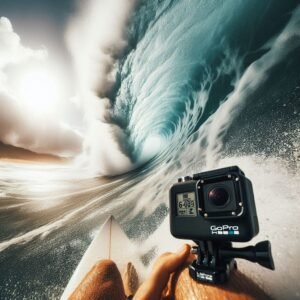
GoPro Hero 13 Black — HyperSmooth stabilization sets the standard
Resources
- U.S. Fish & Wildlife Service – Wildlife Monitoring
- National Park Service – Research & Data
- USGS National Wildlife Health Center
Final Verdict on Waterproof Action Cameras
After field evaluation across Northern Michigan waterways, Manistee National Forest trail networks, and Lake Michigan shoreline, the DJI Osmo Action 6 earns the top spot for serious outdoor use.
Its 20m native waterproofing — no case required — combined with 4-hour battery life and exceptional low-light performance makes it the most capable all-around waterproof action camera in 2026.
Whether you’re running it on a kayak mount down the Pere Marquette or clipping it to a helmet for backcountry singletrack, it handles real conditions without fuss.
For budget-conscious adventurers, the AKASO EK7000 Pro is the honest pick. The 131ft waterproof rating with included case and dual-battery system make it a legitimate field camera — not a toy — at a fraction of flagship pricing. We’ve run multiple units through full-day river floats without issue.
The Insta360 X4 earns special recognition for anglers, wildlife photographers, and researchers who can’t afford to miss the moment. Full 360° coverage means the shot exists somewhere in the footage — the AI reframing finds it in post.
For Pere Marquette kayak fishing where the action comes from every direction, it changes how you document the trip entirely.
Match the camera to your actual use case: go premium for primary footage in demanding conditions, budget for backup or multi-angle setups, and 360° when comprehensive scene coverage matters more than raw resolution.
Also see our breakdown of how waterproof ratings actually work in field conditions before making your final call.
— JC Courtland, Outdoor Tech Lab
For more gear reviews and outdoor technology guides, explore our articles on trail camera setup strategies and outdoor gear bargains.


Leave a Reply to JC Cancel reply