

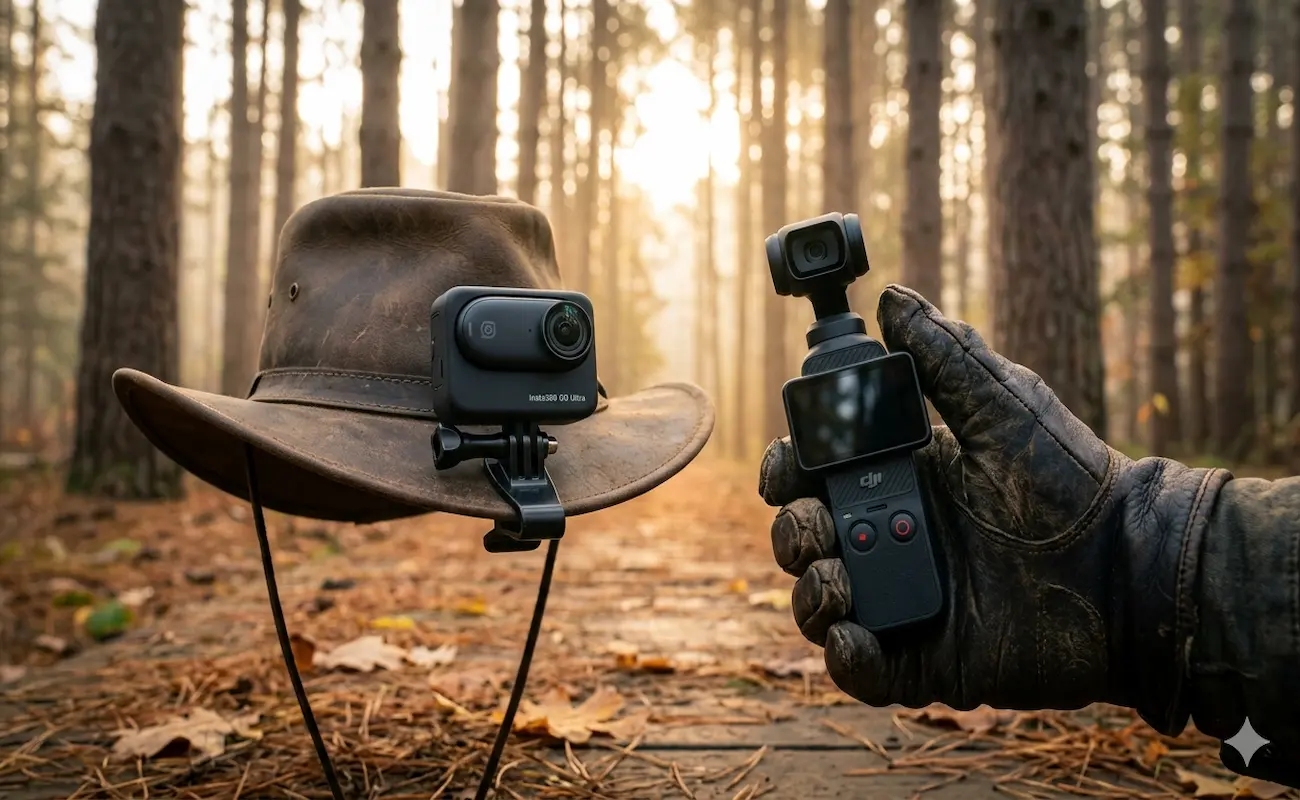
In 2026, the question isn’t megapixels. It’s how you move. A 53g wearable clip vs a precision cinematic gimbal — here’s which one belongs on your next adventure.
COMPARED Updated March 2026
This Insta360 GO Ultra vs DJI Osmo Pocket 3 comparison covers two cameras that are both sold as high-end vlogging tools but occupy completely different points on the creator spectrum.
Put them next to each other on a table and the contrast is immediate — one weighs roughly as much as a AA battery and magnetically clips to your hat; the other is a precision handheld instrument with a three-axis mechanical gimbal.
They are not competing for the same buyer.
The Insta360 GO Ultra Creator Bundle is built around one idea: get the camera out of your hands. At 53g with a 156° field of view, magnetic mounting, and a hands-free wearable design, it’s the tool for outdoor creators who are too busy doing the activity to hold a camera.
Hikers, cyclists, kayakers, anglers — anyone whose hands are occupied by something more important than a camera grip.
The DJI Osmo Pocket 3 Creator Combo is built around a different idea entirely: produce the best possible footage in a pocket-sized form.
Its 1-inch CMOS sensor and 3-axis mechanical gimbal deliver cinematic, stabilized video that no wearable camera with electronic stabilization can fully replicate.
You hold it with intention, point it with purpose, and the footage reflects both.
The price difference between the two — with the GO Ultra currently running at a meaningful discount and the Pocket 3 sitting at a premium — adds a value dimension to what is already a fundamental form-factor question.
Check current pricing on both below before reading further, since both cameras have been running discounts off their list prices.
At Outdoor Tech Lab, we’ve tested both cameras through Northern Michigan field conditions — the GO Ultra worn hands-free on active trail segments through Ludington State Park, clipped to pack straps and hat brims during the kind of movement that makes handheld filming impractical; the Pocket 3 handheld on rooted forest paths through Manistee National Forest, where the mechanical gimbal’s performance advantage over digital stabilization is most visible.
If camera gear protection in rugged conditions is on your mind before choosing, our guide to protecting camera gear while hiking is essential reading before either of these goes into your pack.
TL;DR — Insta360 GO Ultra vs DJI Osmo Pocket 3 Quick Answer
The Insta360 GO Ultra is better for: active creators who need hands-free, wearable POV footage.
At 53g with magnetic clip mounting, the GO Ultra is the camera for cyclists, hikers, anglers, and kayakers whose hands are occupied by the activity itself.
The Action Pod extends total battery to 200 minutes, the 12-minute fast charge is genuinely field-practical, and the 4K Active HDR handles variable outdoor light.
The 5nm AI chip powers PureVideo Mode for low-light processing — the tech story of this camera. It is the more accessible price option of the two.
The DJI Osmo Pocket 3 is better for: cinematic storytellers who prioritize footage quality above all else.
The 1-inch CMOS sensor and 3-axis mechanical gimbal produce footage quality that no electronic stabilization system can match on walking and handheld use.
ActiveTrack face and object tracking, 4K/120fps slow motion, and the DJI Mic included in the Creator Combo make it a complete cinematic production kit. It carries a significant premium over the GO Ultra and is not designed for hands-free or wearable use.
Bottom line: The Insta360 GO Ultra wins on portability, wearability, and value. The DJI Osmo Pocket 3 wins on image quality, stabilization smoothness, and cinematic output.
Choose the GO Ultra if you move fast and shoot hands-free. Choose the Pocket 3 if you shoot with intention and footage quality is the non-negotiable.
Which Camera Is Right for You?
| Use Case | 🔵 GO Ultra | 🎬 Osmo Pocket 3 |
|---|---|---|
| Hands-Free / Wearable POV | ✅ Built for it | ❌ Not designed for it |
| Cinematic Walking Footage | Electronic stab. | ✅ Mechanical gimbal |
| Weight / Packability | ✅ 53g — lightest | ❌ 179g |
| Sensor Size / Low Light | 1/1.28″ + AI chip | ✅ 1-inch CMOS wins |
| AI-Powered Video Processing | ✅ 5nm AI chip (unique) | Standard processing |
| Total Battery Life (w/ accessories) | ✅ 200 min (Action Pod) | ~140 min |
| Standalone Battery | 70 min | ✅ ~140 min |
| Fast Charging | ✅ 0–80% in 12 min | ❌ Standard charge |
| Magnetic Mounting | ✅ Yes — clip anywhere | ❌ No |
| 4K Active HDR | ✅ Yes | Standard HDR |
| 4K/120fps Slow Motion | 4K/60fps max | ✅ 4K/120fps |
| Face / Object Tracking | ❌ Not included | ✅ ActiveTrack |
| Still Photo Resolution | ✅ 35 MP | Standard |
| Price Value | ✅ More accessible | Premium price |
| Included Wireless Mic | ❌ Not included | ✅ DJI Mic (Creator Combo) |
Insta360 GO Ultra vs DJI Osmo Pocket 3: Full Specs Comparison
Side-by-side specifications from verified manufacturer and Amazon listing data. Swipe left on mobile to see all details.
| Specification | 🔵 Insta360 GO Ultra | 🎬 DJI Osmo Pocket 3 |
|---|---|---|
| Sensor Size | 1/1.28″ CMOS + 5nm AI Chip | 1-inch CMOS ✓ |
| Max Video Resolution | 4K/60fps, 4K Active HDR | 4K/120fps (Slo-Mo) ✓ |
| Stabilization Type | Electronic (AI-Assisted) | 3-Axis Mechanical Gimbal ✓ |
| Field of View | 156° Wide FOV ✓ | Standard Wide (~93°) |
| Weight | 53g — lightest in class ✓ | 179g (6.3 oz) |
| Aperture | f/2.85 | f/2.0 ✓ |
| AI Processing | 5nm AI Chip — PureVideo Mode ✓ | Standard processing |
| Low-Light Mode | PureVideo Mode (AI-powered) ✓ | Benefits from larger sensor |
| Wearable / Hands-Free | ✅ Magnetic clip, hat, pendant ✓ | ❌ Handheld only |
| Standalone Battery | 70 min | ~140 min ✓ |
| Total Battery (w/ Pod) | 200 min (Action Pod) ✓ | ~140 min (no expansion pod) |
| Fast Charging | 0–80% in 12 min ✓ | Standard charge time |
| Still Photo Resolution | 35 MP ✓ | Standard |
| Magnetic Mounting | ✅ Full magnetic ecosystem ✓ | ❌ No native magnets |
| Face / Object Tracking | ❌ Not included | ✅ ActiveTrack Face + Object ✓ |
| Included Mic | ❌ Not included | ✅ DJI Mic (Creator Combo) ✓ |
| What’s In The Box | Camera, Action Pod, Pendant, Clip, Tripod, Mount, Pivot Stand ✓ | Camera, Mic, Battery Handle, Tripod, Carry Bag |
| Star Rating | 4.3/5 (130 reviews) — Overall Pick | 4.6/5 (5,689 reviews) — #1 Best Seller ✓ |
| Amazon Status | Overall Pick — 4K Vlogging | #1 Best Seller — Camcorders ✓ |
| Current Price | See live price ↓ (lower price) ✓ | See live price ↓ |
🔵 Insta360 GO Ultra
Sensor: 1/1.28″ CMOS + 5nm AI Chip
Video: 4K/60fps, 4K Active HDR
Weight: 53g — lightest in class
Battery: 70 min solo / 200 min w/ Pod
Best for: Active sports, cycling, fishing, POV
Stars: ⭐ 4.3/5 (130 reviews)
🎬 DJI Osmo Pocket 3
Sensor: 1-inch CMOS
Video: 4K/60fps standard / 4K/120fps slo-mo
Stabilization: 3-Axis Mechanical Gimbal
Battery: ~140 min standalone
Best for: Hiking footage, vlogging, wildlife
Stars: ⭐ 4.6/5 (5,689 reviews)
Real-World Testing: Northern Michigan Field Results
Insta360 GO Ultra: Ludington State Park Active Trail Testing
The Camera That Disappears Into the Activity
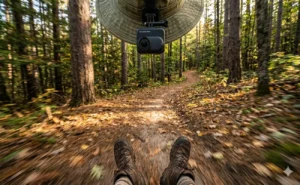
The GO Ultra’s 53g weight and magnetic clip system change what outdoor filming looks like in practice. Clipped to a hat brim, attached via the Magnet Pendant on a chest harness, or mounted to a pack strap — the camera simply disappears into the activity.That is the camera’s core proposition and it holds up completely. The footage it produces from a hat brim is first-person perspective that no Pocket 3 owner can replicate without a specialized mounting rig. For cycling, trail running, or any outdoor pursuit where your hands belong on something other than a camera, the GO Ultra is in a category by itself.
The 4K Active HDR performance in variable Michigan outdoor light — sun breaking through tree canopy, high-contrast shoreline conditions — handled the dynamic range well. The 156° field of view captures an immersive perspective that suits the wearable format; it reads naturally as a first-person shot rather than a security camera angle.
The 5nm AI chip’s PureVideo Mode — the technology story of this camera — handles low-light processing in shaded trail sections. The sensor is physically smaller than the Pocket 3’s 1-inch CMOS, and in direct comparison under closed forest canopy the Pocket 3’s larger sensor collects more light with greater natural detail.
But the AI processing narrows that gap noticeably versus what a 1/1.28″ sensor would produce without it, and in the context of wearable active shooting — where you’re not choosing your shot angle with precision — the output quality is more than adequate.
The Modular Battery System in the Field: The 70-minute standalone battery is a real limitation for extended days, but the Action Pod system addresses it directly. The full 200-minute runtime with the pod is more than sufficient for a full day’s active trail use. The 12-minute fast charge (0–80%) is genuinely field-practical — a lunch break or a car stop is enough to bring the standalone camera back to operational status before the next segment.
What We Shot in the Field:
• Hat-clip POV on active trail segments — hands-free throughout, camera invisible during scrambling
• Chest-mounted footage on shoreline terrain at Ludington State Park — wide FOV captured full surroundings
• 4K Active HDR on high-contrast Lake Michigan shoreline — dynamic range handled well
• Shaded forest trail sections — PureVideo Mode tested in low ambient light
• Pack-strap mounting during loaded carry — stable mounting, no interference with hiking mechanics
• Quick-clip transitions between mounting positions — magnetic system fast and reliable in field use
The One Limitation to Know: The GO Ultra’s wide 156° FOV and fixed perspective mean you’re not composing shots — you’re capturing what’s in front of you.
For content where framing and composition matter, the camera’s strength becomes a constraint. It is a first-person capture tool, not a precision camera.
Understanding that distinction before purchase saves disappointment.
💡 OTL Pro Tip: For the best wearable angle with the GO Ultra, start with the hat-brim clip rather than the chest pendant for trail hiking. The hat-brim perspective reads as natural first-person and captures terrain ahead without your pack or clothing filling the lower frame. Switch to the Pivot Stand for any stationary shot — it gives you the flexibility of a mini tripod in a 53g package.
Insta360 GO Ultra: Field Demo
Insta360 GO Ultra hands-free wearable POV — real-world footage from field testing.
DJI Osmo Pocket 3: Manistee National Forest Cinematic Testing
The Camera That Makes Every Shot Look Intentional
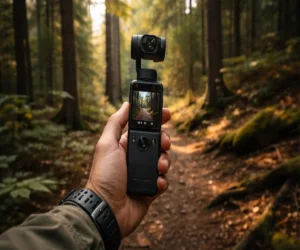
The Pocket 3 on a forest trail is a different experience entirely from wearable camera use. You carry it in your hand, you choose your angle deliberately, and the camera responds to that intentionality with footage quality that reflects it.
On rooted, uneven trail surfaces through Manistee National Forest — conditions that produce noticeable motion artifact in digital stabilization — the mechanical gimbal delivered walking footage that simply looks different from anything electronic stabilization produces.
The 1-inch CMOS sensor and f/2.0 aperture separate the Pocket 3’s image quality from every camera in the wearable or action category.
Under the closed hardwood canopy of Manistee National Forest in afternoon conditions — the kind of light situation where smaller sensors begin producing processed, grain-heavy footage — the Pocket 3 maintains clean, accurate color with shadow detail that the GO Ultra’s 1/1.28″ sensor, even with AI assistance, does not fully match.
ActiveTrack Face and Object Tracking: For solo outdoor content creation — talking-to-camera vlogging on trail, equipment review footage without a second operator — ActiveTrack is a genuine workflow tool.
The face tracking locked quickly and held through moderate movement in field testing.
This is a capability the GO Ultra does not offer, and for solo creators who need to be in their own footage while in the field, it represents real practical value.
What We Shot in the Field:
• Walking footage on rooted Manistee forest paths — gimbal eliminated footfall shake completely
• Handheld pan shots on open trail sections — fluid, cinematic motion from 3-axis stabilization
• Low-light forest canopy conditions — 1-inch sensor maintained clean detail where smaller sensors struggled
• Solo vlog footage with ActiveTrack — face tracking held through standing movement and turn-to-camera shots
• 4K/120fps slow-motion captures on creek crossings — slow motion quality noticeably above 60fps footage
• Camp setup gear review footage — DJI Mic captured clean outdoor audio in light wind conditions
The Waterproofing Reality: The Pocket 3 is not waterproof in standard configuration — a meaningful limitation in Northern Michigan outdoor conditions that involve creek crossings, intermittent rain, and wet brush contact throughout the hiking season.
Field management in variable weather required dry bag access and deliberate protection practices that the GO Ultra does not demand.
For solo camping and backcountry use, this adds a layer of gear management overhead worth factoring before purchase.
Our best solo camping gear guide covers the full safety kit — camera protection is a recurring consideration in backcountry load planning.
💡 OTL Pro Tip: For solo vlogging with the Pocket 3 on trail, pre-set ActiveTrack before putting the camera on the mini tripod — don’t try to activate tracking after you’re already in frame. Get the camera positioned, activate tracking on your face from arm’s reach, then step back to your shot position. The tracking acquires cleanly at distance rather than struggling with an immediate full-frame face lock-on.
The 5 Key Differences That Actually Matter
1. Form Factor: Wearable Clip vs Precision Handheld — A Foundational Split
This is not a minor design preference — it is the entire purchasing decision. The Insta360 GO Ultra was built to be worn: magnetically attached to a hat, clipped to a chest harness, or mounted on virtually any flat surface.
At 53g, it adds zero meaningful weight to a hiking kit and zero workflow overhead during active movement.
The DJI Osmo Pocket 3 was built to be held: a precision instrument you take out of your pocket, frame your shot deliberately, and operate with intention.
Neither is a compromise of the other — they represent two completely different philosophies about what a camera should do.
Choosing the wrong one for your primary use case produces footage and a field experience that reflect the mismatch, regardless of which has the technically superior specs.
Ask this question before any other: do I need my hands free, or do I want to choose every frame?
2. Sensor + AI: 1/1.28″ and 5nm AI Chip vs 1-inch CMOS
The DJI Osmo Pocket 3’s 1-inch sensor wins on raw light collection and natural image quality, particularly in challenging light. A 1-inch sensor physically captures significantly more light than a 1/1.28″ sensor, and the f/2.0 aperture versus the GO Ultra’s f/2.85 compounds that advantage in low-light situations.
The Insta360 GO Ultra counters with a 5nm AI chip — a processor architecture that powers PureVideo Mode and AI-based low-light enhancement.
This is the 2026 story in compact cameras: using computational processing to close the gap with larger sensors. In bright outdoor conditions, the difference between the two sensors narrows.
In genuinely low light — forest canopy, dawn and dusk — the Pocket 3’s physical sensor advantage remains visible even with the GO Ultra’s AI processing active.
The AI chip is not a replacement for a larger sensor; it is a meaningful partial mitigation of a smaller one.
3. Stabilization: Electronic AI vs Mechanical Gimbal — Different Outputs, Not Equal Alternatives
The DJI Osmo Pocket 3’s 3-axis mechanical gimbal produces footage that electronic stabilization systems cannot fully replicate.
Three physical motors counteract movement in real time — the result is fluid, cinema-quality motion on walking footage that looks demonstrably different from digitally processed output.
For handheld walking footage specifically, the mechanical difference is visible in direct comparison and it is not subtle.
The Insta360 GO Ultra uses electronic stabilization with AI assistance. For wearable and active mounting use — the application the camera is designed for — electronic stabilization is the correct engineering choice.
A mechanical gimbal would add weight, fragility, and complexity to a camera that needs to be clipped to a hat brim and forgotten. The GO Ultra’s stabilization is appropriate for its use case.
The Pocket 3’s mechanical gimbal is the right tool for handheld cinematic shooting. Comparing them as if they are alternatives in the same use case misses the point of both cameras.
4. Battery: Modular Action Pod System vs Integrated Battery
The GO Ultra’s 70-minute standalone battery is the first number that raises concern — but the full picture is more nuanced.
The Action Pod, included in the Creator Bundle, extends total runtime to 200 minutes and serves as the camera’s charging hub.
The 12-minute fast charge (0–80%) turns what could be a field limitation into a manageable workflow: a short break fully restores operational capacity.
The Pocket 3’s approximately 140-minute standalone battery is more consistent for a single-session shoot without requiring the modular system.
For a full day of outdoor use, however, the GO Ultra’s 200-minute combined runtime edges ahead of the Pocket 3 in total available shooting time before requiring a swap or external power.
Both cameras support external power via USB-C, and both benefit from a spare battery or portable power bank on extended trips.
For a complete look at keeping cameras and electronics charged in the field, our best waterproof action cameras guide includes power management considerations across the full action camera category.
5. Price Gap: The ~$130 Difference and What Each Delivers for It
The Insta360 GO Ultra Creator Bundle is the more accessible option between the two — currently available at a meaningful discount off its list price.
The DJI Osmo Pocket 3 Creator Combo carries a higher price point that reflects a complete production kit: camera body, wireless mic, battery handle, mini tripod, and carry bag.
Evaluated as complete kits, the price gap is real and worth examining honestly. The GO Ultra’s Creator Bundle includes the camera, Action Pod, Magnet Pendant, Quick Release Safety Cord, Magnetic Easy Clip, Mini 2-in-1 Tripod, Quick Release Mount, and Pivot Stand — a full accessories package at its price point.
The Pocket 3 Creator Combo includes the DJI Mic, which alone carries meaningful standalone value if audio quality is part of your content requirements.
Neither camera is overpriced for what it delivers. The GO Ultra is correctly priced as a specialized wearable tool; the Pocket 3’s premium reflects genuine performance differences in image quality and stabilization.
The question is whether those differences align with how you actually shoot — check current Amazon pricing on both, since both have been running at discounts, and make the call with live numbers in front of you.
Which One Should You Buy?
✅ Buy the Insta360 GO Ultra Creator Bundle if…
• You are an active creator — cycling, climbing, kayaking, fishing, trail running — whose hands are occupied during the activity
• Hands-free, wearable POV footage is the primary use case for your content
• You want the lightest possible camera at 53g without sacrificing 4K quality
• The magnetic mounting ecosystem fits your existing accessories and shooting style
• 200-minute total battery life and 12-minute fast charge matter for full-day field use
• You are budget-conscious and want meaningful savings versus the Pocket 3
• 4K Active HDR and 35MP stills at a wearable form factor match your content needs
• The 5nm AI chip’s PureVideo Mode low-light processing is the 2026 tech story you want
⭐ 4.3/5 Stars • 130 Reviews • Overall Pick — 4K Vlogging • 53g • 200 Min Battery
✅ Buy the DJI Osmo Pocket 3 Creator Combo if…
• Footage quality is the non-negotiable priority and you want the best image in a pocket-sized form
• Hiking and trail footage is your primary use case and you want cinematic handheld results
• Smooth, mechanical gimbal stabilization is important for your content style
• Solo vlogging with face and object tracking (ActiveTrack) is part of your workflow
• 4K/120fps slow-motion capability matters for your action and outdoor content
• You want a wireless mic included in the kit for outdoor audio capture
• Low-light performance under forest canopy and at dawn/dusk is a regular shooting condition
• You are a DJI ecosystem user — check our full DJI drone and camera guide for the complete lineup
⭐ 4.6/5 Stars • 5,689 Reviews • #1 Best Seller Camcorders • 1-Inch CMOS • 3-Axis Gimbal
🔵 Insta360 GO Ultra Pros
- 53g wearable — lightest capable 4K camera available
- Magnetic mounting — clip to hat, chest, pack, or any surface
- 200-minute total battery with Action Pod
- 12-minute fast charge (0–80%) — field-practical recovery
- 5nm AI chip with PureVideo Mode low-light processing
- 4K Active HDR and 156° wide field of view
- 35MP still photo resolution
- More accessible price point — meaningful savings vs Pocket 3
Insta360 GO Ultra Cons
- 70-minute standalone battery — requires Action Pod for full-day use
- Electronic stabilization — cinematic walking footage less smooth than mechanical gimbal
- 1/1.28″ sensor — smaller than Pocket 3’s 1-inch in raw light collection
- No face/object tracking — handheld solo vlogging less capable
- No wireless mic included — audio accessories sold separately
- Fixed 156° perspective — limited compositional control vs handheld framing
🎬 DJI Osmo Pocket 3 Pros
- 1-inch CMOS sensor — best image quality in this comparison
- 3-axis mechanical gimbal — cinematic walking footage no electronic system matches
- ActiveTrack face and object tracking — solo creator essential
- 4K/120fps slow motion — full resolution slow-mo capability
- f/2.0 aperture — better low-light than GO Ultra’s f/2.85
- ~140-minute standalone battery — no pod required
- DJI Mic wireless transmitter included in Creator Combo
- 4.6/5 stars across 5,689 reviews — most proven option
DJI Osmo Pocket 3 Cons
- 179g — significantly heavier than GO Ultra’s 53g
- Not wearable — handheld or tripod use only
- No magnetic mounting system — requires traditional tripod/adapter
- Not waterproof — requires separate case for rain or splash exposure
- No modular battery expansion — capped at ~140 min without external power
- Higher price — meaningful premium over GO Ultra Creator Bundle
More Outdoor Tech Lab Camera & Gear Guides
These OTL guides cover every related piece of the outdoor content creation picture:
• DJI Osmo Pocket 3 vs GoPro Hero 13 — how the Pocket 3 stacks up against the leading action cam
• DJI Osmo Action 5 Pro vs GoPro Hero 13 — DJI’s action camera vs GoPro head-to-head
• Best waterproof action cameras — full category rankings by outdoor use case
• How to protect camera gear while hiking — essential reading before either camera goes into a pack
Insta360 GO Ultra vs DJI Osmo Pocket 3 FAQ
Is the Insta360 GO Ultra or DJI Osmo Pocket 3 better for hiking?
It depends entirely on how you hike and what you want from your footage. The Insta360 GO Ultra is better for active hiking where your hands are occupied — scrambling, trekking poles, fishing, or any movement where holding a camera creates a safety or practical problem. At 53g with magnetic hat-brim or chest clip mounting, it disappears into the hike and captures continuous POV footage without requiring any attention. The DJI Osmo Pocket 3 is better for hiking where footage quality and composition are the priority — scenic trail vlogging, wildlife documentation, and any hiking style where you pause to frame shots intentionally. Its 1-inch sensor and mechanical gimbal produce walking footage quality that the GO Ultra’s electronic stabilization cannot match. The right answer: if you hike to do things, choose the GO Ultra. If you hike to film things, choose the Pocket 3.
Can the Insta360 GO Ultra actually be worn hands-free during outdoor activities?
Yes — the hands-free wearable design is the GO Ultra’s defining feature and it functions as advertised in field conditions. The Magnet Pendant and Magnetic Easy Clip allow the camera to attach to clothing, hat brims, chest harnesses, and pack straps securely enough for cycling, trail running, and active hiking. The magnetic system includes a Quick Release Safety Cord that keeps the camera tethered even if the magnetic connection is disrupted by a hard impact or snag. In Northern Michigan trail testing, the hat-brim clip stayed secure through active movement and off-trail scrambling without adjusting or interfering with the activity. The camera does not shake loose under normal active use. The 53g weight means you genuinely forget it is there within a few minutes of wearing it — which is precisely the point.
Which has better stabilization — the Insta360 GO Ultra or DJI Osmo Pocket 3?
They use fundamentally different stabilization approaches, and both are optimized for their intended use cases. The DJI Osmo Pocket 3 uses a 3-axis mechanical gimbal — three physical motors that counteract movement in real time — producing fluid, cinematic walking footage that electronic stabilization cannot fully replicate. For handheld filming while hiking, the Pocket 3’s mechanical stabilization is demonstrably smoother and more cinematic in direct side-by-side comparison. The Insta360 GO Ultra uses electronic stabilization with AI assistance, which is the appropriate engineering choice for a 53g wearable camera — adding a mechanical gimbal to a hat-clip camera would be impractical. For active wearable use, the GO Ultra’s stabilization performs well and produces footage that is stable and watchable. If stabilization smoothness in handheld walking footage is your primary quality criterion, the Pocket 3 wins. If you need a camera that clips to your hat and disappears, the GO Ultra’s electronic stabilization is the right tool for that job.
How does the Insta360 GO Ultra’s 5nm AI chip improve low-light performance?
The 5nm AI chip powers the GO Ultra’s PureVideo Mode, which applies AI-based computational processing to improve image quality in low-light conditions. Rather than simply applying noise reduction after the fact, the AI chip works to intelligently process the signal from the 1/1.28″ sensor to recover detail and reduce noise artifacts in challenging light — shaded trail conditions, dawn and dusk shooting, and scenes with high contrast between bright and shadow areas. In practice, PureVideo Mode produces noticeably cleaner low-light footage than the GO Ultra’s sensor would deliver without it. That said, the DJI Osmo Pocket 3’s 1-inch CMOS sensor with f/2.0 aperture collects more light physically, and the gap between them — while narrowed by the AI chip — remains visible in genuinely challenging low-light conditions. The 5nm chip is the correct technology story for this camera in 2026: computational photography closing the gap between sensor size tiers. It does not fully close it, but the improvement is real.
What is the actual battery life difference between the GO Ultra and Osmo Pocket 3?
The Insta360 GO Ultra runs 70 minutes standalone and 200 minutes total when used with the included Action Pod. The DJI Osmo Pocket 3 runs approximately 140 minutes standalone. For a direct standalone comparison, the Pocket 3 lasts twice as long as the GO Ultra’s 70-minute solo runtime — a meaningful gap if you plan to use the GO Ultra camera body without the pod attached. With the Action Pod in use, the GO Ultra’s 200-minute total runtime exceeds the Pocket 3 by roughly an hour. The practical field consideration: the GO Ultra’s 12-minute fast charge (0–80%) largely mitigates the standalone battery concern during breaks on a full-day outing, while the Pocket 3’s 140-minute standalone runtime handles a half-day shoot without requiring any charging management. For both cameras, carrying a portable power bank covers extended multi-day use.
Which is better for solo outdoor vlogging — GO Ultra or Osmo Pocket 3?
The DJI Osmo Pocket 3 is the stronger solo vlogging tool in the traditional sense — talking-to-camera outdoor content, hiking vlog footage, and gear review style shooting where you are actively framing and composing shots. ActiveTrack face tracking keeps you centered in frame without a second operator, the rotatable OLED screen lets you monitor your own shot, and the DJI Mic included in the Creator Combo captures clean outdoor audio. For that format, the Pocket 3 is the correct tool. The Insta360 GO Ultra takes a fundamentally different approach to solo content: instead of replacing the need for a camera operator with tracking technology, it removes the camera from the creator’s hands entirely. The POV footage it captures while worn during an activity tells a story the Pocket 3 physically cannot tell. Many outdoor creators use both camera types for different parts of their content — handheld cinematic footage for intentional segments, wearable POV for the active moments.
Is the Insta360 GO Ultra waterproof for outdoor use?
The Insta360 GO Ultra is designed for active use including diving, per the Amazon product listing. For specific waterproofing depth ratings and IPX certification details, check the manufacturer’s official specifications before exposing the camera to submersion. For general outdoor use — rain exposure, splash from water activities, sweat during active sports — the camera is designed to handle active conditions. The DJI Osmo Pocket 3 by comparison is not waterproof in standard configuration and requires a separately purchased case for any rain or water exposure. If waterproofing for submersion is a primary requirement for your shooting conditions, verify the GO Ultra’s specific depth ratings against your planned activities before purchasing, and consider whether a purpose-built waterproof action camera from our waterproof action camera guide is the more appropriate tool.
Is the DJI Osmo Pocket 3 worth the extra cost over the Insta360 GO Ultra?
The answer is use-case specific and not a blanket yes or no. The Pocket 3 Creator Combo costs more than the GO Ultra Creator Bundle, but it is a complete cinematic production kit — camera body, wireless mic, battery handle, tripod, and carry bag. The image quality difference, particularly the 1-inch sensor advantage in low light and the mechanical gimbal’s cinematic stabilization, is real and visible in footage. For outdoor content creators who shoot hiking vlogs, wildlife documentation, and nature content for YouTube or social media audiences, that quality difference translates directly to content performance, and the premium is justified. For active sports creators — cyclists, anglers, kayakers, trail runners — who need a camera that captures the activity rather than frames it artfully, the GO Ultra delivers unique wearable capability that the Pocket 3 cannot replicate at any price. The extra money for the Pocket 3 is worth it if footage quality and cinematic output are the priority. It is not worth it if hands-free wearable shooting is what you actually need.
Outdoor Content Creation & Trail Safety Resources
We reference these resources when evaluating gear for trail and wilderness use.
- Huron-Manistee National Forests — USFS
Official trail and conditions information for Northern Michigan’s primary testing ground — where OTL runs all extended field gear evaluations. - Leave No Trace: 7 Principles
The framework for responsible outdoor use that informs how we approach nature and wildlife content creation in the field.
OTL Bottom Line: Insta360 GO Ultra vs DJI Osmo Pocket 3
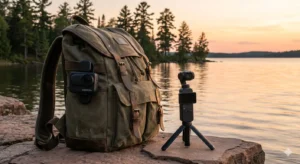
After running both cameras through Northern Michigan trail conditions, the conclusion that the spec sheet points toward holds completely in the field — these cameras are not competing for the same creator, and choosing between them is a question about how you move and what you want your footage to do.
The Insta360 GO Ultra is the camera for outdoor creators who are too busy doing the activity to hold a camera. At 53g with a magnetic mounting system that attaches to virtually anything, it delivers hands-free POV footage that no handheld camera can replicate — and it does it at a price that makes it accessible without requiring a premium commitment.
The 5nm AI chip and PureVideo Mode represent the 2026 story in compact camera tech: computational intelligence closing the gap with larger sensors. The 200-minute total runtime and 12-minute fast charge are genuinely field-practical advantages.
If you cycle the trails around Ludington, kayak the Manistee River, or fish the Pere Marquette with both hands on the rod, the GO Ultra goes where the Pocket 3 cannot.
The DJI Osmo Pocket 3 is the camera for outdoor creators who prioritize footage quality above all else. The 1-inch CMOS sensor, 3-axis mechanical gimbal, and ActiveTrack face tracking produce results that are demonstrably in a different class from any wearable or action camera at this price point.
For hiking content creators, wildlife documentarians, and any outdoor creator whose audience judges content on footage quality, the Pocket 3 justifies its premium.
Pair it with the DJI drone ecosystem covered in our DJI drone guide and you have a complete aerial and ground-level cinematic production kit for Northern Michigan outdoor content.
Neither camera is the wrong choice. They are the right choice for different creators. The question was never which is better — it was which one matches how you move and adventure.
Ready to Choose Your 2026 Adventure Camera?
🔵 GO Ultra: ⭐ 4.3/5 • 130 Reviews • Overall Pick • 53g Wearable | 🎬 Pocket 3: ⭐ 4.6/5 • 5,689 Reviews • #1 Best Seller
This comparison was last updated in March 2026 with verified specifications and field testing notes. Tested in Northern Michigan by Outdoor Tech Lab.


Leave a Reply