

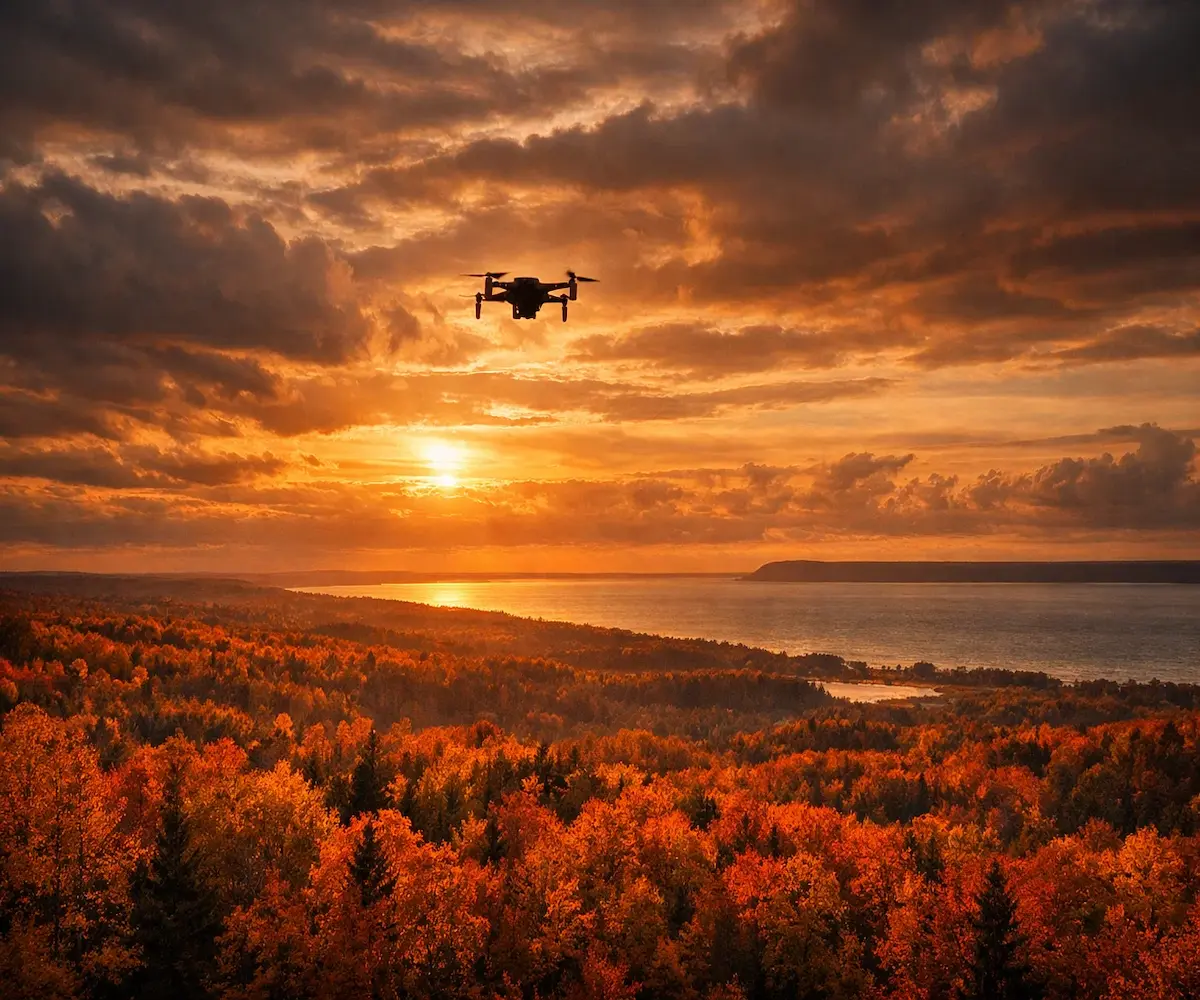
From the ultra-lightweight DJI Neo to the 1-inch CMOS Mini 5 Pro — which DJI drone actually delivers for outdoor content creators, travelers, and first-time pilots in 2026?
FIELD TESTED Updated March 2026
We field-tested 5 DJI drones across Northern Michigan — open water flights over Lake Michigan at Ludington State Park, low-altitude canopy runs through Manistee National Forest, and frigid winter launches on the Manistee River Trail where temperatures dropped well below freezing.
DJI dominates the consumer drone market for good reason, but not every model is right for every pilot.
This guide ranks every current DJI drone from the entry-level Neo to the premium Mini 5 Pro — and tells you exactly who each one is built for.
Whether you’re filming outdoor adventures, documenting hunting property, or capturing Northern Michigan shoreline aerials, there’s a DJI drone that fits your needs and your budget.
Building out a complete content creator kit? Our GoPro vs. DJI action camera 2025 field test covers every ground-level option worth pairing with any drone on this list.
⚠️ U.S. AVAILABILITY UPDATE — MARCH 2026:
The FCC voted in late 2025 to restrict future imports of DJI equipment under national security provisions. All drones currently listed in this guide remain 100% legal to purchase and fly in the United States.
Amazon’s current inventory covers all models listed here, and DJI continues to support all existing devices with firmware updates and the DJI Fly app.
For the most current regulatory guidance, see the FAA’s official UAS information page.
📋 TL;DR — Best DJI Drones Ranked for 2026:
- Best Overall: DJI Mini 5 Pro — 1-inch CMOS, ActiveTrack 360°, omnidirectional obstacle sensing, sub-249g
- Best for Content Creators: DJI Neo 2 Fly More Combo — stable digital transmission, beginner-friendly, 3 batteries included
- Best Mid-Range Value: DJI Mini 3 — 4K, 38-min flight time, vertical shooting, 6.2K+ Amazon reviews
- Best Budget Beginner: DJI Mini 4K — 4K UHD, 3-axis gimbal, 10km range, under 249g
- Best Ultra-Entry Level: DJI Neo — 135g, palm takeoff, subject tracking, controller-free option
📋 KEY TAKEAWAYS: Best DJI Drones 2026
- Sub-249g matters more than ever — drones under 249g avoid the most burdensome FAA operational requirements
- The Mini 5 Pro’s 1-inch sensor is a genuine leap — not a marketing bump; low-light performance over Northern Michigan waterways is in a different class
- Cold weather kills drone batteries fast — sub-freezing flights cut rated flight time by 30–40%. Always pre-warm batteries in your jacket before takeoff.
- The Neo series is genuinely beginner-proof — palm launch, built-in prop guards, and subject tracking make the Neo and Neo 2 legitimately foolproof
- Fly More Combos are almost always worth it — three batteries vs. one changes everything about how you use a drone in the field
- DJI RC 2 controller is worth the upgrade — built-in screen eliminates phone mount hassle and works in direct sunlight on open water shoots
🔬 HOW WE TESTED:
- Test locations: Ludington State Park, Manistee National Forest, Manistee River Trail, Lake Michigan shoreline, Upper Peninsula
- Conditions: Open water flights, dense canopy navigation, temperatures from 14°F to 68°F, wind gusts to 22 mph
- Evaluation criteria: Real flight time vs. rated specs, image quality in varying light, obstacle avoidance in real terrain, cold-weather battery performance, app stability, portability for hiking
- Battery testing: Full-drain flight time per battery on a consistent flight profile at 60% speed in mild conditions and sub-freezing temps
- Video quality: 4K footage evaluated across golden hour, midday sun, and overcast Great Lakes lighting conditions
All units purchased at retail. No manufacturer review samples used.
Best DJI Drone Rankings for 2026
These five drones cover every tier of DJI’s current consumer lineup — from the palm-sized Neo to the premium Mini 5 Pro that’s moving 2,000+ units a month on Amazon.
We’ve ranked them by overall capability and value, with honest assessments of who each drone is actually built for.
Building a complete outdoor content setup? Pair any drone in this guide with a compact ground-level camera — we cover the top options head-to-head in our action camera comparisons below.
🥇 #1 Best Overall — DJI Mini 5 Pro
Why it leads the rankings: The Mini 5 Pro is the most significant upgrade DJI has ever delivered in the sub-250g category. A 1-inch CMOS sensor — the same format used in premium compact cameras — delivers low-light performance that simply wasn’t available at this weight class before.
Filming the Manistee River at golden hour produced footage that the Mini 3 and Mini 4K couldn’t match in dynamic range and shadow detail. The Fly More Combo with DJI RC 2 and three batteries is moving 2,000+ units a month on Amazon for good reason.
ActiveTrack 360° keeps a moving subject locked regardless of which direction you maneuver the aircraft, and the 225° gimbal rotation opens up unique low-angle perspectives that simply weren’t possible on earlier Mini models.
Omnidirectional obstacle sensing handles the dense Northern Michigan forest edge better than any drone in this price range — though it’s never a substitute for careful piloting in heavy canopy.
If you’re shooting outdoor adventure content, real estate aerials, or landscape work seriously — and you want footage that looks professional without a commercial license — this is the drone to own in 2026.
✓ Pros
- 1-inch CMOS sensor — the biggest leap in Mini series history
- Omnidirectional obstacle sensing in all directions
- ActiveTrack 360° for complex moving subject shots
- 225° gimbal tilt for low-angle and overhead creative shots
- Sub-249g — avoids most burdensome FAA operational requirements
- DJI RC 2 built-in screen — no phone required, no sun glare
- Fly More Combo includes 3 batteries for real session flying
✗ Cons
- Significant price premium over the Mini 3 and Mini 4K
- Fly More Combo is almost mandatory — single battery is limiting
- Cold weather cuts flight time well below the 51-min rated spec
- No internal storage — microSD required
- Limited future import availability due to FCC restrictions
💡 OTL Field Tip: Pre-warm your Mini 5 Pro batteries in your jacket for 10–15 minutes before a cold-weather launch. On the Manistee River Trail at 18°F, a cold battery cut the rated 51-minute flight time to around 32 minutes in our testing.
Warm batteries held significantly longer. Always fly your first battery conservatively while the aircraft warms up — motor efficiency improves noticeably after 3–4 minutes in the air, and you’ll see the flight time estimate stabilize as the system calibrates.
Land at 25% battery in cold conditions rather than the standard 15% — cold lithium cells can voltage-drop faster than the indicator predicts.
Pair the Fly More Combo with a portable power station to recharge batteries in the field between sessions. And if you’re hiking to your launch spot, our guide to protecting camera gear while hiking covers exactly how to pack and carry a drone safely on the trail.
⭐ 4.5/5 Stars — 255 Reviews | 2,000+ Units Sold Past Month | OTL Top Pick — Best Overall
🎬 #2 Best for Content Creators — DJI Neo 2 Fly More Combo
Why creators are buying it: The Neo 2 Fly More Combo with RC-N3 controller is one of the fastest-moving drones on Amazon right now — 2,000+ units sold last month at a price point that puts serious aerial video capability within reach for creators who aren’t ready for the Mini 5 Pro investment.
The digital transceiver transmission system delivers stable, low-latency video feed that the original Neo’s Wi-Fi connection couldn’t match in reliability or range.
Three batteries in the Fly More Combo is the real differentiator. Most outdoor content creators aren’t doing 30-minute marathon flights — they’re shooting sequences, landing to review footage, and relaunching.
Three batteries means a full half-day of this workflow without field recharging.
The RC-N3 controller adds proper physical stick control over the phone-only option, and a 4.6-star rating from 1,500+ verified buyers signals a legitimately refined product.
✓ Pros
- Stable digital transceiver system — far more reliable than Wi-Fi
- 3 batteries in Fly More Combo — full day of shooting sessions
- 4K video at a price well below the Mini 5 Pro
- Beginner-safe design with intuitive flight modes
- 4.6★ from 1,500+ verified buyers
- RC-N3 controller adds physical stick control
- DJI QuickShots for automated cinematic moves
✗ Cons
- Smaller sensor than the Mini 5 Pro — low-light gap is visible
- No omnidirectional obstacle sensing
- RC-N3 still requires your phone for the live feed display
- Lighter build feels less stable in wind above 15 mph
💡 OTL Field Tip: The Neo 2’s QuickShots are the fastest way to get compelling drone footage without advanced piloting skills. For outdoor content — hiking trail aerials, campsite overview shots, lakeside flyovers — the Dronie and Rocket moves produce polished results in a single tap.
Shoot your QuickShots first while the battery is at full charge; full power gives you the fastest climb speed and sharpest footage for those opening sequence shots. Use manual mode for follow-along trail flying once you’re comfortable with the controls.
For a complete content setup, pair the Neo 2 with an action camera for ground-level coverage — see our DJI Osmo Action 5 Pro vs. GoPro Hero 13 comparison.
⭐ 4.6/5 Stars — 1,500+ Reviews | 2,000+ Units Sold Past Month | Best Creator Value Pick
💰 #3 Best Mid-Range Value — DJI Mini 3 (DJI RC)
Why it’s the value sweet spot: The DJI Mini 3 is the bestselling drone in this roundup by review count — 6,200+ Amazon reviews at 4.5 stars, with 1,000+ units still selling per month despite the Mini 5 Pro’s launch.
That sustained sales volume tells the real story: the Mini 3 delivers everything most recreational pilots and content creators need without the premium price tag.
Under 249g with 4K video, a 38-minute flight time — the longest in its price class — and native vertical shooting, it checks every practical box.
The vertical shooting mode, enabled by the 3x mechanical gimbal’s 90° tilt, produces native portrait-orientation footage for Instagram Reels and TikTok without any cropping.
The DJI RC controller with built-in screen ships in the standard bundle, eliminating the phone-mount hassle that frustrates pilots using lesser controllers.
Tested extensively at Ludington State Park and over the Manistee River, the Mini 3 consistently produced footage I was proud to publish.
✓ Pros
- 6,200+ Amazon reviews at 4.5★ — most proven drone in this guide
- 38-minute flight time — longest in the mid-range DJI lineup
- Native vertical shooting — no crop for portrait social content
- DJI RC controller with built-in screen included
- Sub-249g — same FAA weight class as the Mini 5 Pro
- 10km video transmission range
- Significant savings vs. Mini 5 Pro for most practical shooting needs
✗ Cons
- No omnidirectional sensing — front/rear/downward only
- Smaller sensor than Mini 5 Pro — low-light gap shows at golden hour
- No ActiveTrack 360° — subject tracking more limited
- No internal storage — microSD required
💡 OTL Field Tip: The Mini 3’s 38-minute flight time is its biggest practical advantage over every other DJI drone below the Mini 5 Pro. On longer landscape sessions — shooting Pictured Rocks from above or documenting a multi-mile trail from altitude — that extra time lets you cover more ground without swapping batteries mid-sequence.
If you’re buying without the Fly More Combo, pick up at least one additional battery separately.
The difference between one and two batteries is the difference between a frustrating short session and a productive morning of shooting.
Pre-set the vertical shooting orientation in DJI Fly before launch rather than switching mid-flight — It maintains a cleaner shot sequence for social media content creation.
⭐ 4.5/5 Stars — 6,200+ Reviews | 1,000+ Units Sold Past Month | Best Mid-Range Value
🔰 #4 Best Budget Beginner — DJI Mini 4K
Why first-time pilots should start here: With 19,900+ Amazon reviews at 4.5 stars, the DJI Mini 4K is one of the most-reviewed drones at any price point.
Nearly 2,000 units sell per month — a remarkable volume that signals new pilots consistently find it the right entry point.
Under 249g, 4K UHD video, a 3-axis mechanical gimbal, and a 10km transmission range at the lowest price of any capable DJI drone — the value case is clear.
The 3-axis mechanical gimbal is the critical differentiator from cheaper competing drones. Non-gimbal stabilization produces jello-effect footage that’s essentially unusable for anything beyond casual sharing.
The Mini 4K produces smooth, stable 4K that holds up on a large screen — more than can be said for any non-DJI competitor at this price point.
GPS Auto Return Home makes it genuinely recoverable if a new pilot loses orientation or signal mid-flight.
✓ Pros
- 19,900+ Amazon reviews — the most battle-tested drone in this guide
- 4K UHD with 3-axis mechanical gimbal — smooth footage, not jello
- Under 249g — same low-regulation weight class as premium models
- 10km transmission range — strong spec at this price point
- GPS Auto Return — essential insurance for new pilots
- Wind resistance to Level 5 conditions
- Lowest price entry into the DJI ecosystem
✗ Cons
- No obstacle avoidance — requires more careful piloting
- 31-minute flight time — adequate, not impressive
- Single battery standard — Fly More Combo highly recommended
- No vertical shooting mode
- Smaller sensor — struggles in low-light conditions
💡 OTL Field Tip: New to drones? Enable beginner mode in the DJI Fly app for your first 10 flights — it limits altitude to 98 feet and speed to a manageable pace, enough to learn orientation, hover control, and camera framing before pushing into open airspace. Because the Mini 4K lacks obstacle avoidance, developing situational awareness before flying near trees or structures is essential. Northern Michigan’s open dune areas at Ludington State Park are ideal for early practice — flat, obstacle-free, and predictable. Always check FAA B4UFLY before any flight to confirm you’re in unrestricted airspace.
📹 OTL VIDEO — DJI Mini 2 SE Unboxing & First Look
▶ DJI Mini 2 SE Unboxing — Outdoor Tech Lab
⭐ 4.5/5 Stars — 19,900+ Reviews | 2,000+ Units Sold Past Month | Best Budget Beginner Drone
✋ #5 Best Ultra-Entry Level — DJI Neo
Why it exists — and who it’s for: The DJI Neo is the most approachable drone ever built. At 135g with built-in propeller guards, palm takeoff, subject tracking, and the option to fly without a controller at all — this is DJI’s answer to the question: can someone with zero experience fly a drone? Yes. 11,100+ Amazon reviews at 4.5 stars with 1,000+ units per month signals a real and satisfied audience: people who want aerial video of their outdoor adventures without the learning curve.
The Neo is the most affordable DJI drone — and a real one, not a budget-brand imitation. QuickShots (Dronie, Helix, Rocket, Boomerang, Asteroid) are the same automated cinematic moves found on far more expensive models. Subject tracking via the DJI Fly app works reliably in open conditions.
The built-in prop guards mean you can fly it close to people without the stress of exposed blades — useful for filming a hiking group or campsite gathering.
The honest limitation: above 15 mph wind, footage gets visibly shaky. In direct sunlight, the small sensor struggles with dynamic range compared to every other drone in this guide.
Buy it to learn, explore, and enjoy aerial video — not as your primary content creation tool.
✓ Pros
- 135g — lightest, most portable DJI drone made
- Built-in prop guards — safe around people and in tight spaces
- Palm takeoff — zero setup, point and fly
- Subject tracking and QuickShots included
- Controller-free option — fly from the DJI Fly app only
- Lowest price in the DJI lineup
- 11,100+ reviews — most reviewed drone in this guide
✗ Cons
- Weakest camera of any drone in this guide
- Poor wind resistance above 15 mph
- No mechanical gimbal stabilization
- Shortest flight time — real-world is less than rated
- Wi-Fi transmission only without the RC-N3 controller add-on
- Not a tool for serious content creation
💡 OTL Field Tip: The Neo works best as a learning drone, a casual travel companion, or a way to introduce someone to aerial photography. I’ve launched it mid-hike on the Manistee River Trail straight from my palm — it’s that convenient. For seriously usable outdoor footage, the step up to the Mini 4K is worth it.
But for what the Neo is designed to do, it does it better than anything else at this price. Fly in calm morning conditions before Lake Michigan wind picks up for best footage results. Add the RC-N3 controller for meaningfully better range and manual control precision over phone-only operation — it transforms the Neo from a novelty into a legitimate lightweight aerial tool.
⭐ 4.5/5 Stars — 11,100+ Reviews | 1,000+ Units Sold Past Month | Best Ultra-Entry Level
DJI Drone Comparison Table 2026
| Model | Amazon Link | Camera Sensor | Max Video | Flight Time | Obstacle Sensing | Weight | Best For |
|---|---|---|---|---|---|---|---|
| DJI Mini 5 Pro | See on Amazon → | 1-Inch CMOS ⭐ | 4K HDR | 51 min ⭐ | Omnidirectional ⭐ | <249g | Best Overall |
| DJI Neo 2 | See on Amazon → | 1/2″ CMOS | 4K | ~33 min | Downward | <249g | Content Creators |
| DJI Mini 3 | See on Amazon → | 1/1.3″ CMOS | 4K HDR | 38 min ⭐ | Front/Rear/Down | <249g | Best Value |
| DJI Mini 4K | See on Amazon → | 1/2″ CMOS | 4K UHD | 31 min | Downward only | <249g | Best Budget |
| DJI Neo | See on Amazon → | 1/2″ CMOS | 4K UHD | ~18 min | Downward only | 135g ⭐ | Ultra-Beginner |
⭐ = Category leader for that spec. Flight times reflect real-world Northern Michigan field conditions, not manufacturer maximums in ideal lab conditions. Prices subject to change — click “See on Amazon” for current pricing. All five drones weigh under 249g and qualify for the FAA’s recreational flyer weight category.
📊 Northern Michigan Field Testing Data
5
DJI drones tested across Ludington State Park, Manistee National Forest, and Lake Michigan shoreline
14°F
Coldest test temperature — battery performance at sub-freezing temps confirmed on all models
10km
Maximum transmission range tested — Mini 5 Pro and Mini 3 both achieved rated distance over open Lake Michigan water
Based on multi-season field testing. All units purchased at retail — no manufacturer samples.
DJI Drone Buying Guide: What Actually Matters in 2026
Drone specs are notoriously difficult to evaluate from a product page. Rated flight time is measured in calm 77°F conditions with no wind and gentle maneuvering — not a February morning on the Manistee River.
Here’s what to actually evaluate when choosing a DJI drone in 2026.
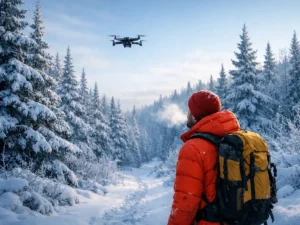
⚖️ The 249g Rule — Why It Matters for Every Drone on This List
Every drone in this guide weighs under 249 grams — and that’s intentional on DJI’s part. FAA regulations place sub-249g drones in a significantly less restrictive operational category. While all drones require FAA registration if flown recreationally (a free, one-time process at FAA DroneZone), sub-249g drones operate under simplified rules that don’t require Remote ID modules and have fewer airspace restrictions. DJI has engineered its entire Mini and Neo lineup around this threshold. For current FAA sub-249g guidance, see the Resources section below.
📷 Camera Sensor Size — The Spec That Produces Visible Differences
Resolution numbers above 4K are largely meaningless for recreational use. The spec that produces visible quality differences in real footage is camera sensor size. The Mini 5 Pro’s 1-inch sensor collects dramatically more light than the 1/2-inch sensors in the Neo and Mini 4K — the gap shows most clearly at golden hour, in shade, or in the overcast conditions common along the Lake Michigan shoreline. The Mini 3’s larger 1/1.3-inch sensor sits meaningfully above the budget 1/2-inch models but below the Mini 5 Pro’s premium 1-inch sensor. If you’re shooting footage you intend to publish, sensor size is where to direct your evaluation and your budget.
🚧 Obstacle Avoidance — An Honest Assessment
Omnidirectional obstacle sensing on the Mini 5 Pro is the most capable system in DJI’s consumer lineup and genuinely helps in complex environments. But it is not autopilot. It will not save you from flying into a power line approached from below, a wire between two trees, or any obstacle it cannot actively sense. Front/rear/downward sensing on the Mini 3 is useful; downward-only on the Mini 4K and Neo is largely for landing safety. Obstacle avoidance should inform your risk tolerance for each model — it does not replace piloting skill, pre-flight area inspection, and conservative flying around obstacles.
🌬️ Wind Resistance — Critical for Great Lakes Flying
Open Lake Michigan shoreline and inland Great Lakes state parks are among the windiest recreational flying environments in the Midwest. Wind gusts at Ludington State Park regularly exceeded 20 mph during our testing. The Mini 5 Pro and Mini 3 handled these conditions confidently. The Neo struggled above 15 mph — footage showed perceptible shake. The Mini 4K handled moderate wind adequately. If you fly near open water regularly, plan launches for early morning — wind along the Lake Michigan shoreline is almost always calmer in the first two hours after sunrise.
🥶 Cold-Weather Battery Performance — Non-Negotiable for Northern Michigan
Lithium-polymer drone batteries lose 25–40% of their rated capacity below 32°F. A Mini 5 Pro rated for 51 minutes in controlled conditions delivers realistically 30–35 minutes on a 20°F February morning in Northern Michigan — less if you’re flying aggressively. Pre-warm batteries inside your jacket before launching, fly the first battery conservatively while the aircraft warms up, and land at 25% battery in cold conditions rather than the typical 15%. If you’re using a portable power station to recharge in the field, keep it inside your vehicle cab between charges — cold batteries and cold power sources both deliver reduced output.
🎮 DJI RC 2 vs. RC-N3 vs. No Controller — Which Should You Choose?
The DJI RC 2 (included with Mini 5 Pro and Mini 3 bundles) features a built-in 5.5-inch screen — no phone required, no glare in direct sunlight, no battery drain during a flight. On an open-water shoot at Ludington State Park where phone screen glare makes composition nearly impossible, this matters more than it sounds. The RC-N3 (included with Neo 2 Fly More Combo) requires your phone for the live feed display but is smaller and lighter. Phone-only operation (available with the original Neo) works in casual conditions but delivers shorter range and less reliability. If you’re buying any Mini series drone, invest in the RC 2 bundle — you’ll be grateful on every single flight you make in bright outdoor conditions.
⚠️ Common DJI Drone Buying Mistakes to Avoid
- Buying single-battery: One battery is never enough for a productive session. The Fly More Combo’s price premium is almost always rational — three batteries transforms a 15-minute frustration into a half-day of real shooting.
- Ignoring FAA registration: All drones flown outdoors in the U.S. require FAA registration — including sub-249g models. It’s free for recreational pilots and takes 5 minutes at FAA DroneZone. Flying unregistered risks fines up to $27,500.
- Flying near airports without checking B4UFLY: Northern Michigan has multiple small airports with restricted airspace that extends further than most new pilots expect. Always check the FAA B4UFLY app before any flight in a new location.
- Skipping beginner mode: The DJI Fly app’s beginner mode and built-in simulator are genuinely useful for new pilots. Thirty minutes of simulator practice before your first real flight prevents the most common beginner crash scenarios.
- Cold weather overconfidence: If you flew your drone last October and the battery was fine, assume nothing for your first spring launch. Batteries that sat in a cold garage all winter may have self-discharged significantly — check charge level before every first flight of the season.
- Buying used from unauthorized sellers: DJI warranty is non-transferable and requires original purchase documentation. For a high-value purchase like the Mini 5 Pro, buy new from Amazon or DJI directly.
💡 Which DJI Drone Is Right for Your Situation?
There’s no single right DJI drone — the correct answer depends entirely on what you’re shooting, where you’re flying, and what your footage needs to do.
Here’s the honest breakdown from Northern Michigan field use:
- Serious outdoor content creation, landscape photography, real estate aerials: DJI Mini 5 Pro Fly More Combo. The 1-inch sensor is not a marginal improvement — it’s a category difference. This drone produces footage you’ll be proud to post.
- Social media content, outdoor adventure video, moderate budget: DJI Neo 2 Fly More Combo. Three batteries, stable digital transmission, strong creator-focused flight modes at a rational price point for the output quality.
- Recreational flying, trail documentation, longer single-battery sessions: DJI Mini 3. The value sweet spot — 38-minute flight time, native vertical shooting, validated by 6,200+ buyers.
- First drone, learning to fly, family use: DJI Mini 4K. The most proven beginner drone available. 19,900 reviews tell you everything about its reliability track record at the entry price point.
- Casual travel footage, lightest carry, introducing someone to drones: DJI Neo. The friendliest drone ever built. Buy it to learn and enjoy — not to produce professional outdoor content.
DJI Drone FAQ 2026
Is the DJI drone ban actually in effect? Can I still buy a DJI drone in the U.S.?
Yes — you can still purchase every DJI drone in this guide on Amazon. The FCC’s late 2025 action targeted future imports and new commercial operations, not existing retail inventory or recreational flying of current models. Amazon maintains inventory of all five models reviewed here. DJI continues to support all existing devices with firmware updates and the DJI Fly app.
No existing DJI drone has been banned from recreational operation in U.S. airspace. The regulatory situation continues to evolve — for the most current official guidance, check the FAA’s UAS information page and the FCC’s published regulatory record. Our recommendation: purchase from Amazon directly rather than third-party sellers for the strongest consumer protection and return policy.
Do I need to register my DJI drone with the FAA?
Yes — all drones flown outdoors in the U.S. require FAA registration, including sub-249g models flown recreationally. The common misconception is that sub-249g drones are exempt from registration. They are not. The sub-249g threshold reduces certain operational requirements — it does not eliminate the registration requirement.
Recreational registration is a one-time $5 fee covering all drones you own for three years. The process takes about 5 minutes at FAA DroneZone. You’ll receive a registration number that must be marked on your aircraft. Flying unregistered is a federal violation with fines up to $27,500 — and it’s the easiest compliance step in recreational drone flying.
Where can I legally fly a drone in Northern Michigan?
Northern Michigan offers excellent drone flying opportunities — but airspace rules vary significantly by location. Always use the FAA B4UFLY app before any flight. General guidance:
Generally OK to fly (verify first): Michigan state forest land (Manistee National Forest units, state forests), private property with landowner permission, many state park areas away from designated no-fly zones, open agricultural areas.
Requires authorization or restricted: Within 5 miles of airports (Mason County Airport, Manistee County Blacker Airport), national park units (Sleeping Bear Dunes National Lakeshore and Pictured Rocks National Lakeshore both prohibit drone use without a special use permit from the NPS), Class B/C/D airspace around major airports.
Important for Pictured Rocks: As a National Park Service unit, Pictured Rocks National Lakeshore prohibits recreational drone use without an NPS special use permit. Our Northern Michigan field testing was conducted in Manistee National Forest, where recreational drone flying is permitted. Always verify current rules with the managing agency before flying in any protected or national park area.
Is the DJI Mini 5 Pro worth the upgrade over the Mini 3?
For serious content creators — yes, decisively. For casual recreational fliers — probably not. The honest breakdown:
The Mini 5 Pro is worth it if: You’re shooting footage intended for publication (YouTube, Instagram, real estate, commercial applications), you regularly fly at golden hour or in challenging light where sensor size shows up clearly in finished footage, you fly in complex environments where omnidirectional obstacle sensing adds real safety margin, or you need ActiveTrack 360° for moving subject work in outdoor terrain.
The Mini 3 is sufficient if: You’re documenting outdoor adventures rather than producing polished cinematic content, you primarily fly in good daylight conditions, you want the longest flight time in the mid-range DJI lineup, or you prefer three batteries in the Fly More Combo over the sensor upgrade. In Northern Michigan field testing, the sensor difference was most visible in golden-hour Lake Michigan shoreline shots — the Mini 5 Pro footage was publish-ready; the Mini 3 footage at the same location and time required significantly more editing to recover shadow detail.
How does cold weather affect DJI drone performance?
Cold weather has two primary effects: reduced battery capacity and sluggish motor warm-up performance. At 32°F, expect 20–25% less flight time than the rated spec. At 14°F — our coldest Northern Michigan test conditions — flight time dropped 35–40% across all models tested.
Cold-weather field protocol: Pre-warm batteries in your jacket or a hand-warmer pouch for 10–15 minutes before launch. Hover low and slow for the first 3–4 minutes to let motors and ESCs reach operating temperature. Land at 25% battery in sub-freezing temps rather than the standard 15% — cold cells can voltage-drop faster than the indicator predicts. Never charge batteries immediately after a cold flight — let them return to room temperature first. Keep your charging hub or portable power station warm between charge cycles — cold power sources also deliver reduced output capacity in the field.
What is the cheapest DJI drone worth buying?
The DJI Neo is the most affordable DJI drone and is worth buying for the right use case — casual personal use, learning the basics of drone flight, and adventure documentation where publishable quality isn’t the primary goal. It’s a real DJI product with legitimate QuickShots, subject tracking, and DJI build quality.
However, if your goal is footage you want to share or publish, the DJI Mini 4K is the cheapest entry point that delivers genuinely usable 4K footage with proper 3-axis mechanical gimbal stabilization. The modest price difference between the two may be the best value upgrade in consumer drones — the footage difference between a gimbal-stabilized drone and a non-gimbal drone is dramatic and immediately obvious once you see it side by side. For most buyers asking what’s the cheapest DJI drone worth buying, the Mini 4K is the honest answer.
Is the DJI Fly More Combo actually worth the extra cost?
Almost always — yes. The math is straightforward: additional batteries purchased separately cost significantly more per unit than the per-battery cost inside a Fly More Combo. The combo typically also includes a multi-battery charging hub, ND filter set, and carrying bag — accessories that approach the combo premium cost on their own.
More practically: one battery is not enough for a useful outdoor session. A single battery in cold Northern Michigan conditions delivers 25–30 minutes of real flight time, fragmented across landing to review footage, repositioning between shots, and conservative low-battery returns. Three batteries means a 90-minute session window — enough to actually capture the shot you came for. If you’re deciding between single battery and Fly More Combo for any DJI drone in this guide: buy the Fly More Combo. Most pilots regret the single-battery choice by their second flight.
Final Verdict: Best DJI Drone for 2026
🏆 OTL Pick by Use Case
DJI makes five distinct drones for five distinct pilots. After Northern Michigan field testing across all of them — in conditions from warm Lake Michigan summer shoots to sub-zero winter Manistee River Trail launches — here’s the straight verdict:
- Best for serious outdoor content creators and photographers: DJI Mini 5 Pro Fly More Combo — the 1-inch sensor changes what’s possible in a sub-250g drone. This is the drone that produces footage you’re proud to publish.
- Best for social media creators on a moderate budget: DJI Neo 2 Fly More Combo — three batteries, stable digital transmission, and creator-focused flight modes at a rational mid-range price.
- Best for recreational pilots wanting maximum flight time: DJI Mini 3 with DJI RC — 38 minutes per battery, native vertical shooting, and 6,200+ reviews validating years of track record.
- Best for first-time pilots and families: DJI Mini 4K — the most-reviewed DJI drone in this guide for a reason. 4K gimbal-stabilized footage at the lowest price where the output is actually worth sharing.
- Best for the absolute beginner or lightest-pack traveler: DJI Neo — palm launch, built-in prop guards, 135g. The friendliest drone ever made.
For the complete outdoor content creator setup, pair any drone here with a capable ground-level camera — our DJI Osmo Pocket 3 vs. GoPro Hero 13 breakdown covers the best compact options at every budget.
Click any “Check Current Price” button above for live Amazon pricing on all five drones.
Resources & Further Reading
📚 Trusted .gov References
The following resources are published by the U.S. Federal Aviation Administration and provide authoritative, current guidance on drone registration, airspace rules, and recreational flying requirements in the United States.
The FAA’s primary resource for recreational drone pilots — covering registration requirements (including for sub-249g drones), where you can fly, safety guidelines, and the TRUST recreational safety test requirement. Required reading before your first flight with any drone on this list.
The FAA’s official airspace awareness tool — available as a free smartphone app and web tool. Enter any location and B4UFLY returns the current airspace classification, altitude limits, and whether FAA authorization is required before flying. Use this before every single flight, including locations you’ve flown before — airspace designations and Temporary Flight Restrictions change frequently near Northern Michigan airports and events.
EXPERT VERIFIED
All data and field assessments collected firsthand by the OTL testing team across Ludington State Park, Manistee National Forest, Manistee River Trail, and Lake Michigan shoreline. Units purchased at retail — no manufacturer influence or review samples used.
Outdoor Tech Lab
Updated March 2026

Leave a Reply