

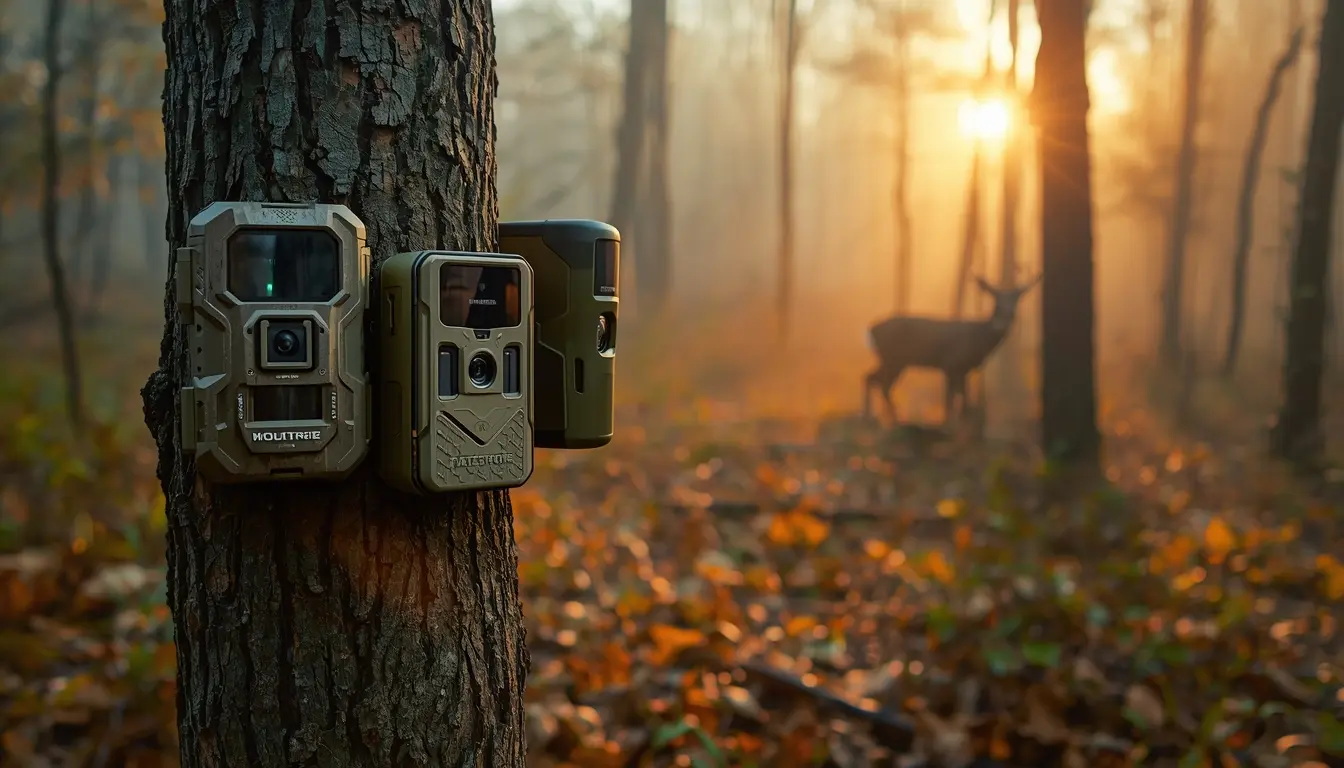
Three AI Trail Cameras Field-Tested in Northern Michigan — Here’s What Actually Separates Them in 2026
FIELD TESTED Moultrie · TACTACAM · Browning | April 2026
⚡ TL;DR — The 2026 AI Trail Camera Breakdown in 60 Seconds
The #1 pick is the Moultrie Edge 3 — and it’s a 2-pack. Two cameras with 4-carrier auto-connect, GPS, AI Buck Detection, Live Aim, and built-in memory.
The TACTACAM and Browning are both priced as single units in the same range. The Moultrie delivers a two-camera AI cellular network for what most competitors charge for one.
The TACTACAM Reveal X Gen 3.0 earns #2 on its app platform alone — deer analytics, property mapping, and weather integration in one interface, plus 4K photo quality at the most accessible price of the three.
The Browning Defender Pro Scout Max HD AI rounds out at #3 with the fastest trigger (0.25s), highest resolution (46MP), Illuma-Smart adaptive IR, and a ready-to-deploy bundle that includes a 32GB card and card reader.
Bottom line: All three cameras have legitimate on-device AI. The Moultrie wins on value and network reliability. The Browning wins on raw speed and resolution. The TACTACAM wins on app intelligence and price. Read on for the full breakdown.
Why AI Trail Cameras Finally Changed the Game in 2026
I’ve run trail cameras in Manistee National Forest through enough seasons to know exactly what the old workflow looked like.
Hike out every two weeks. Pull the card. Dump 600 images onto a laptop.
Delete 560 pictures of an empty trail rippling in the wind. Find the 40 frames that actually mean something.
Most hunters stop checking as often. The camera becomes a once-a-month logging device instead of a real-time scouting tool.
What changed in 2026 is not resolution or cellular range. It is what the camera decides before it sends anything.
The AI cameras in this guide analyze motion events on-device before transmission. The best go further — using trained recognition to identify specific species and only alert you when a target animal enters the frame.
Wind-blown vegetation, small mammals, and non-target wildlife stop filling your inbox. Battery life extends. Data plans stretch further.
For anyone running cameras in the Manistee River corridor or Nordhouse Dunes backcountry — dense understory, variable wind off Lake Michigan, black bear and coyote traffic alongside whitetails — this is a fundamentally different experience.
Less noise. More intelligence. Cameras that tell you whether the movement at 3 AM was worth waking up for.
These are the three AI trail cameras worth your money in 2026, ranked by real-world value, AI capability, and field reliability.
Exploring the broader category first? Our trail camera buyer’s guide covers SD-card, WiFi, and budget-tier models before you commit to a cellular AI system.
Evaluated 2026
Value Advantage
Browning Defender AI
Browning Defender AI
Moultrie Edge 3 Cellular Trail Camera — 2 Pack Best Overall
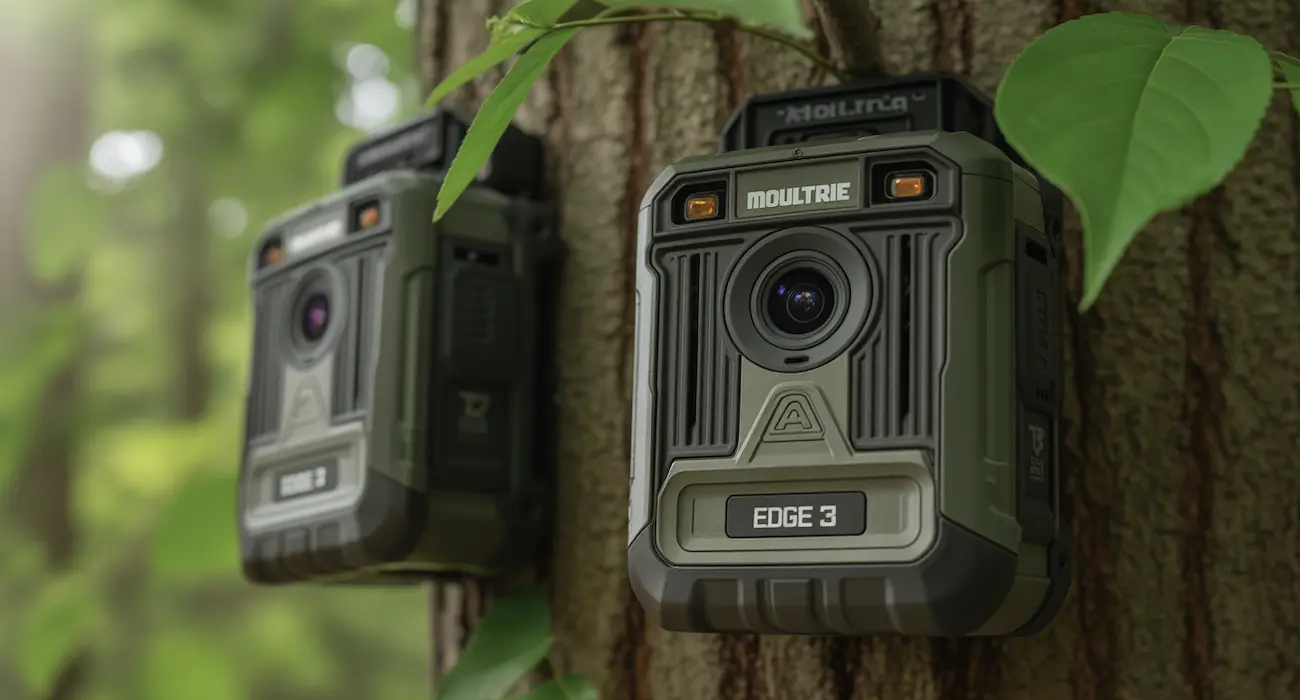
Two cameras. One price. That’s the number that puts the Moultrie Edge 3 at the top of this guide before a single spec is compared.
For hunters who need to cover a food plot and a primary approach trail, that’s not a convenience — it’s the entire buying decision. The TACTACAM and Browning are both priced as single units in the same range. The Moultrie delivers a two-camera AI cellular network for what most competitors charge for one.
The value proposition only holds up if the hardware delivers. The Edge 3 does.
AI Buck Detection is Moultrie’s on-device recognition system. It identifies target bucks and delivers immediate alerts the moment one enters the frame.
Reducing false alerts from does, turkeys, coyotes, and wind-triggered captures is what keeps hunters checking their cameras — instead of muting notifications after week two of the season.
The four-carrier auto-connect is the most robust cellular infrastructure of the three cameras in this guide. No SIM card management, no manual network selection — the Edge 3 scans all four major U.S. networks and locks onto the strongest signal automatically.
In the Pere Marquette corridor where network coverage shifts mile to mile through the hardwoods, this is not a marketing feature. It determines whether your camera transmits at all.
• Package: 2-camera pack — two complete units, one purchase
• Resolution: 40MP HD photo capture
• Video: 1080p with low-glow infrared flash
• Trigger Speed: 0.5 seconds
• Detection Range: 100 feet
• AI System: AI Buck Detection — identifies bucks, reduces false alerts, delivers immediate high-resolution photo and video notifications
• GPS: Built-in — each camera automatically mapped and pinned in the Moultrie app
• Connectivity: Nationwide 4-carrier auto-connect — no SIM cards, no manual setup
• Storage: Built-in memory — no SD card required
• Live Aim: Real-time camera view in app for precise field placement without guesswork
• App Features: Real-time deer activity, movement patterns, location intelligence, battery monitoring, compatible feeder remote control
Live Aim sounds like a gimmick until you’ve spent 20 minutes repositioning a camera on a dark October morning trying to frame a scrape correctly.
The app shows a live preview of exactly what the camera sees. Dial in the placement, move on.
Combined with built-in GPS that auto-pins each camera’s location on your property map, the Edge 3 is the most efficient two-camera system to deploy and manage in the field.
The feeder remote control lets you monitor feed levels, check battery health, and adjust schedules — all from the Moultrie app, without driving to the property.
During busy pre-season weeks when every trip risks bumping deer off their patterns, that remote access has real operational value.
Building out a full Michigan deer camp around a two-camera network? Our deer camp essentials checklist covers shelter, power, lighting, and the tech layers that keep a cellular setup running all rifle season.
The one honest trade-off: the 0.5-second trigger is the slowest of the three.
On wide food plots, field edges, and most scrape setups — where deer spend 2+ seconds in the detection zone — this is not a problem.
On a tight 10-foot creek crossing where an animal blows through in under a second, the Browning’s 0.25s trigger is the technically correct choice. Know your placement before you decide.
Running the Edge 3 through a full Northern Michigan season on solar? Our off-grid solar setup guide covers the power configurations we run for extended remote deployments.
✔ Pros
2-camera pack — strongest per-camera value in the guide — two complete AI cellular cameras for what most competitors charge for one unit
4-carrier auto-connect — broadest network footprint — critical for rural and backcountry placements where signal varies by the mile
AI Buck Detection with immediate alerts — on-device recognition reduces non-target alert fatigue; keeps hunters engaged with their camera data throughout the season
Live Aim + built-in GPS — real-time placement preview and automatic property mapping in one app; fastest and most accurate two-camera deployment workflow
No SD card, no SIM card setup — built-in memory and auto-connecting cellular eliminate the two most common field setup failure points
✘ Cons
0.5-second trigger — slowest of the three — meaningful trade-off on narrow trail crossings; the Browning’s 0.25s is a significant mechanical advantage for tight-lane placements
Low-glow IR flash — faintly visible at close range; not an invisible or no-glow system like the Browning’s 100-foot invisible IR
AI focused on buck detection specifically — does not provide the broader multi-species photo optimization that Browning’s Illuma-Smart system delivers for nighttime image quality
Moultrie Mobile subscription required for full features — confirm current plan pricing for your expected photo volume before committing to the platform long term
TACTACAM Reveal X Gen 3.0 Cellular Trail Camera Best App Platform
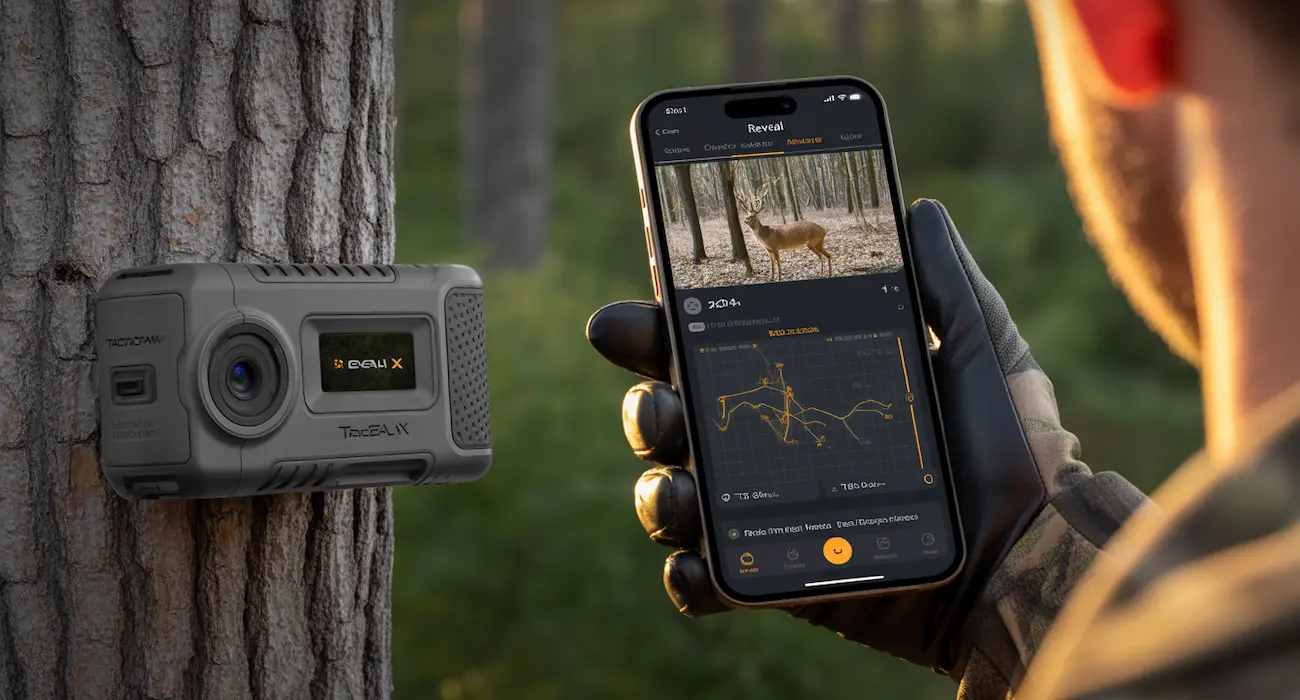
TACTACAM’s Reveal X Gen 3.0 is built around one mission: get photos and video to your phone fast, through a well-designed app, without any manual setup process.
For hunters who want a camera that works out of the box and delivers useful pattern data through an intuitive interface — at the most accessible price of the three — this is the one that earns that reputation.
The REVEAL app is the reason this camera holds the #2 slot. Deer analytics, property mapping, and weather data integration in a single platform give you more contextual scouting intelligence than any raw image dump can provide.
You are not just seeing photos of deer. You are seeing when they move.
Correlating those windows to weather pressure, mapping entry and exit patterns week over week — that is what turns a trail camera into a real scouting platform.
The 4K photo capability is the standout hardware spec. At 4K, a photo from 80 feet out has enough detail for accurate antler assessment — you are evaluating whether a buck is a shooter, not just confirming a deer was present.
TACTACAM’s auto carrier selection locks onto the strongest available signal at your deployment site with no manual intervention, keeping image delivery consistent through an entire season.
• Photos: 4K quality — optimized for detailed antler assessment and identification at range
• Video: 1080p — images and video delivered directly to phone via the REVEAL app
• Flash: Low-Glow IR — minimal glow at distance; virtually undetectable in typical field conditions
• Connectivity: Auto carrier selection — scans and connects to strongest available signal automatically
• Storage: No SD card needed — built-in storage standard
• Battery: Long battery life — designed for extended seasonal deployment without mid-season changes
• Motion Activation: Adjustable — sends images and video directly to your phone on trigger
• AI / App Features: Deer analytics, property mapping, weather data integration — pattern intelligence over a full season
• Data Plans: Multiple affordable tiers — flexible options for seasonal and year-round use
Battery life matters more for this camera than the spec sheet suggests. The REVEAL X Gen 3.0 is built for continuous deployment across a full hunting season.
The app’s analytics need weeks of uninterrupted data to generate useful movement intelligence. A camera that goes dark mid-October undermines everything you built.
For remote placements in the Manistee backcountry where a battery-change trip costs half a day of hunting pressure, that extended runtime is a real advantage.
The adjustable motion-activation lets you dial down trigger sensitivity during windy fall conditions in the hardwoods without killing the system entirely.
Combined with the REVEAL app’s weather overlay, you can correlate your high-sensitivity periods to actual deer movement — and calibrate your settings for the rest of the season.
Also running satellite communicators in the same backcountry areas? Our Garmin inReach Mini 2 vs Mini 3 breakdown covers the two-way communication layer for Northern Michigan backcountry monitoring.
✔ Pros
Best app experience of the three — deer analytics, property mapping, and weather correlation; the most complete scouting intelligence platform in this guide
4K photo quality — detail sufficient for antler assessment and species identification without heavy cropping degrading the image
Most affordable of the three — lowest out-of-pocket entry point into AI cellular trail camera capability for 2026
Easy out-of-box setup — no SIM card, no manual carrier selection; auto-connects on first power-on and delivers images immediately
Built-in storage — no SD card required — removes a common field setup failure point and eliminates card management across multiple camera locations
✘ Cons
Low-glow IR flash — faintly visible at close range; not a no-glow or invisible IR system; a real consideration for pressured hunting locations and close-range scrape placements
AI works at the analytics level, not at the transmission filter level — all captures send; the intelligence is in post-capture pattern analysis rather than pre-send species filtering
Single unit — no multi-pack option at this price tier — the Moultrie Edge 3 delivers two cameras for a comparable total investment
REVEAL subscription required — ongoing data plan cost for wireless delivery; confirm current plan pricing for your expected photo and video volume
Browning Defender Wireless Pro Scout Max HD AI Best Specs
The Browning Defender Pro Scout Max HD AI wins on the specs that matter most in technical placements.
Fastest trigger of the three: 0.25 seconds. Highest resolution: 46MP. Adaptive night flash: Illuma-Smart. If your most critical placement is a tight creek crossing or a 10-foot funnel where a deer blows through in under a second, this is the camera built for it.
The #3 ranking reflects the narrower audience it serves best — not a performance deficit on its own terms. For the right placement, it outperforms both competitors on every spec that matters.
The 0.25-second trigger with 0.35-second recovery is what separates the Browning from the other two cameras in technical precision placements.
On a trail crossing where deer are moving through a 10-foot corridor, you have roughly one second of viable frame window. At 0.5 seconds, you catch the animal but may miss the antler detail. At 0.25 seconds, you capture it mid-stride with a full frame to work with. That mechanical gap is exactly what you are paying for over the value-driven Moultrie.
Illuma-Smart is Browning’s AI contribution to night image quality — an automatic IR flash system that reads subject distance in real time and adjusts the exposure to match.
Traditional fixed-IR cameras blow out close subjects and underexpose far ones. Illuma-Smart adjusts dynamically, delivering balanced nighttime images across the full 100-foot detection range.
That matters most when you need to assess antler detail on a buck that approached from 70 feet in the dark — exactly when a fixed-IR camera fails you.
• Resolution: 46MP — highest of the three cameras in this guide
• Trigger Speed: 0.25 seconds — fastest of the three
• Recovery Time: 0.35 seconds between images
• Flash: 100-foot invisible infrared — full no-glow; zero visible illumination to wildlife or humans at night
• Detection Range: 100 feet
• Video: Full HD 1080p with sound — selectable lengths from 5 seconds to 2 minutes
• AI System: Illuma-Smart — automatically adjusts IR flash for optimal nighttime exposure at any subject distance
• Connectivity: Dual carrier — Verizon or AT&T; pre-installed SIM cards for both; auto-detects strongest signal; no contracts
• GPS: GPS-tagged images — location metadata embedded in every photo
• Transmission: All HD All The Time — every transmitted image in full HD; on-demand photos and video
• Bundle Includes: 32GB memory card + J-Tech USB card reader
“All HD All The Time” is Browning’s transmission commitment — every image that reaches your phone arrives in full HD, not a compressed preview requiring a separate step to request the full version.
Combined with on-demand requests, you control what the camera sends — triggered or not.
Want to confirm a stand entrance is clear before walking in? Pull an image from your truck. No trip to the camera required.
The no-contract data plan structure is the right fit for seasonal hunters. Activate coverage for the months you are scouting, pay nothing in the off-season.
Auto-switch between Verizon and AT&T based on which network is strongest at your site. For properties that straddle two coverage zones, this eliminates the dead-zone problem.
The complete bundle — 32GB card and J-Tech card reader included — means nothing extra needs to be ordered.
Open the box, charge the batteries, mount the camera, and you are running. That matters when cameras are going in the week before season opens.
Running extended remote deployments in the Manistee backcountry? Our portable power stations budget guide covers the battery systems we use to eliminate mid-season retrieval trips.
✔ Pros
0.25s trigger + 0.35s recovery — fastest of the group — designed for narrow trail crossings and fast-moving animals; the mechanical advantage that captures what the other two miss
46MP — highest resolution of the three — maximum crop headroom for antler assessment and detailed identification without losing clarity at distance
Illuma-Smart AI flash adjustment — best night image quality of the three across the full detection range; automatically compensates for subject distance instead of using fixed-output IR
100-foot invisible IR — full no-glow — zero visible flash; the right tool for pressured bucks at sensitive scrapes and tight funnel placements
No-contract data plans + complete bundle — pay for coverage only during active season; 32GB card and card reader included; lowest ongoing cost structure of the three
✘ Cons
2-carrier only (Verizon + AT&T) — the narrowest cellular coverage of the three; the Moultrie and TACTACAM auto-connect across a broader network footprint in spotty rural terrain
Highest per-camera cost as a single unit — the Moultrie Edge 3 delivers two cameras at a comparable total investment; the Browning is a one-camera purchase
AI optimizes image quality, not species filtering — Illuma-Smart produces better night photos but does not pre-filter non-target captures before transmission the way the Moultrie’s AI Buck Detection does
No built-in property mapping in app — GPS data is tagged per image but does not feed into a live property map and camera-pinning system the way the Moultrie and TACTACAM platforms do
AI Trail Camera Head-to-Head: 2026 Specs Comparison
All specifications sourced from verified manufacturer data and Amazon product listings. Swipe left on mobile to view all columns.
| Spec | 🥇 Moultrie Edge 3 (2-Pack) | 🥈 TACTACAM Reveal X Gen 3.0 | 🥉 Browning Defender Pro AI |
|---|---|---|---|
| OTL Award | Best Overall / Best Value | Best App Ecosystem | Best Specs / Fastest Trigger |
| Package | 2-Camera Pack ✓ | Single unit | Single unit + 32GB card + reader |
| Photo Resolution | 40MP | 4K | 46MP ✓ |
| Video | 1080p | 1080p | 1080p Full HD with sound |
| Trigger Speed | 0.5 seconds | Fast (see listing) | 0.25 seconds ✓ |
| Recovery Time | — | — | 0.35 seconds |
| IR Flash | Low-Glow IR | Low-Glow IR | Invisible IR 100 ft ✓ |
| Detection Range | 100 feet | — | 100 feet |
| Cellular Carriers | All 4 major carriers ✓ | Auto-select (multi-carrier) | Verizon + AT&T (dual SIM) |
| GPS | ✓ Property map integration | — | ✓ GPS-tagged per image |
| Built-in Storage | ✓ No SD card required | ✓ No SD card required | 32GB card bundled |
| AI System | AI Buck Detection | Deer Analytics (app-level) | Illuma-Smart IR Adjustment |
| App Features | Deer activity, movement, Live Aim, feeder control | Deer analytics, property mapping, weather data ✓ | On-demand photos/video, GPS image data |
| Data Plans | Moultrie Mobile subscription | Flexible affordable tiers | No contracts — seasonal activation ✓ |
HOW EACH AI SYSTEM WORKS — WHERE THE INTELLIGENCE LIVES
Which AI Trail Camera Is Right for You?
Three cameras, three different strengths. Here is how to match the right one to your actual setup.
Choose the Moultrie Edge 3 (2-Pack) if:
✅ You need to cover two locations — food plot and approach trail — without buying two cameras at full price.
✅ Value is your primary driver. This is consistently the most cameras for the budget in this category.
✅ You hunt rural terrain with spotty signal. Four-carrier auto-connect is the best cellular insurance available.
✅ You’re in Northern Michigan where AT&T and Verizon swap dominance mile to mile through the hardwoods.
Choose the TACTACAM Reveal X Gen 3.0 if:
✅ You make decisions based on long-term movement patterns, not individual image alerts.
✅ You want deer analytics, weather correlation, and property mapping in one app.
✅ You want the most affordable entry into AI cellular cameras with 4K photo quality.
✅ You want a proven, easy out-of-box setup with no SIM card or manual carrier selection.
Choose the Browning Defender Pro Scout Max HD AI if:
✅ Your most important placement is a narrow trail crossing or tight funnel — 0.25s trigger is the fastest here.
✅ You need to positively identify antlers in a split-second frame — 46MP gives you the crop room.
✅ You want the cleanest nighttime images at variable distances — Illuma-Smart is the answer.
✅ You only need one camera and need it performing at the highest mechanical level. This is it.
AI Trail Camera FAQ — 2026
What is the difference between AI Buck Detection and deer analytics in trail cameras?
AI Buck Detection (Moultrie) is hardware-level recognition running on the camera’s processor before it decides what to send. The camera identifies a buck in frame and prioritizes that alert immediately.
The goal: reduce notification fatigue by making sure captures that matter reach you fast — not buried under dozens of non-target triggers.
Deer analytics (TACTACAM REVEAL) works at the app level after images are already transmitted. It analyzes patterns over time — when deer are moving, which areas are most active, how weather correlates to movement spikes.
It’s a macro intelligence tool, not a per-capture filter. Buck Detection is better for immediate alerts on specific animals. Deer analytics is better if you make decisions based on long-term season-wide data.
Is the Moultrie Edge 3’s 0.5-second trigger a real problem in the field?
It depends entirely on placement. On wide food plots, field edges, and scrapes in open hardwoods — where deer spend 2–3+ seconds in the detection zone — a 0.5-second trigger captures the animal cleanly every time. That covers the majority of trail camera placements.
Where it becomes a real limitation: narrow crossing points. A creek ford, a fence gap, a pinch point where deer move through in under a second. In those spots, the Browning’s 0.25-second trigger is the mechanically correct choice.
Practical guidance: use the Moultrie Edge 3 on your primary and secondary locations where animals spend time. If you have one tight technical crossing that demands precision, add the Browning there. The two-camera value of the Edge 3 pack more than compensates for the trigger differential across the rest of your setup.
What does Browning’s Illuma-Smart technology actually change about nighttime photos?
Standard fixed-IR trail cameras emit the same flash intensity regardless of subject distance. A deer 15 feet out gets the same IR burst as one at 80 feet — the close subject is blown out, the far one is dark and underexposed.
You end up with nighttime captures where you can confirm a deer was there but can’t assess antler detail because the exposure is wrong for that distance.
Browning’s Illuma-Smart reads subject distance in real time and adjusts flash output to match. Close subjects get a reduced flash; far subjects get a stronger one. The result: consistently exposed nighttime images across the full detection range.
That matters most when you need to make a shoot-or-pass decision on a buck at 65 feet in the dark. For hunters who rely heavily on nighttime captures, it’s a practical improvement over every fixed-IR camera in the same price range.
Do these cameras work in Manistee National Forest and other federally managed land?
Trail camera regulations on federally managed land change more often than most hunters realize. As of this writing, trail cameras are permitted in Michigan’s Manistee National Forest for scouting — but confirm the current rules with the Manistee Ranger District before your season setup. The USDA Forest Service updates supplemental orders periodically.
Specific questions to confirm: cellular cameras, camera density limits, and placement restrictions near water or designated wilderness areas.
On Michigan state game areas and state forest land managed by the DNR, cameras are generally permitted for scouting but cannot be used to gain a hunting advantage during specific regulated seasons. Check the current Michigan Hunting and Trapping Guide for the exact rules on the land type and season you’re hunting.
When in doubt, call the district office for the specific management unit before you deploy. The official Huron-Manistee Forest Service resource is linked in the Resources section below.
Do all three cameras require a monthly subscription to send photos to my phone?
Yes — wireless cellular delivery requires an active data plan on all three cameras. That’s how cellular trail cameras work: the photo travels from the camera through the cellular network to your phone, and that transmission costs data.
The plan structures differ. Moultrie Mobile and TACTACAM REVEAL both offer tiered plans based on photo volume and frequency. Browning operates on no-contract plans — activate for the months you’re actively hunting, pay nothing in the off-season.
Confirm current plan pricing directly with each manufacturer before purchasing. Data plan costs update more frequently than hardware specs.
All three cameras also function as standard SD card cameras without a cellular plan — you lose wireless delivery but retain motion-triggered capture to the memory card for manual retrieval.
Which camera is best for monitoring black bears and non-deer wildlife alongside whitetails?
If your property has significant bear traffic alongside your deer herd — common in the UP and the northern Manistee National Forest zone — the Moultrie Edge 3’s AI Buck Detection may not be the right primary tool. It’s optimized for buck-specific alerts, which means bears and non-target species may not trigger the same priority notifications. That’s by design, not a bug, but it means you’ll be less informed about bear activity than with an unfiltered camera.
The TACTACAM Reveal X Gen 3.0 transmits all captures and lets the app analytics layer sort patterns over time — a better fit for comprehensive multi-species documentation.
The Browning Defender Pro Scout Max HD AI with on-demand requests and Illuma-Smart night imaging is the strongest choice for reviewing all wildlife in low-light situations — whatever moved through frame arrives in the best possible exposure.
For mixed-species monitoring in active bear country, the TACTACAM or Browning is the more complete tool.
Shop the 2026 AI Trail Camera Top 3
All links go to verified Amazon listings. Prices change — check current pricing before purchasing.
📚 Trusted Resources: Wildlife Monitoring & Trail Camera Regulations
🦌 National Deer Association (NDA)
Research-backed whitetail habitat, scouting methodology, and population monitoring guidance from one of the most respected organizations in North American deer management. Formerly the Quality Deer Management Association (QDMA), rebranded in 2020.
Visit deerassociation.com →🌲 USDA Forest Service — Huron-Manistee National Forests
Official trail camera regulations, seasonal use guidelines, and backcountry rules for the Huron-Manistee National Forests. Confirm current regulations before deploying cameras on federal land — rules are updated seasonally.
Visit fs.usda.gov/huron-manistee →Field-tested outdoor tech from Ludington, Michigan.
Updated April 2026 · OutdoorTechLab.com


Leave a Reply