
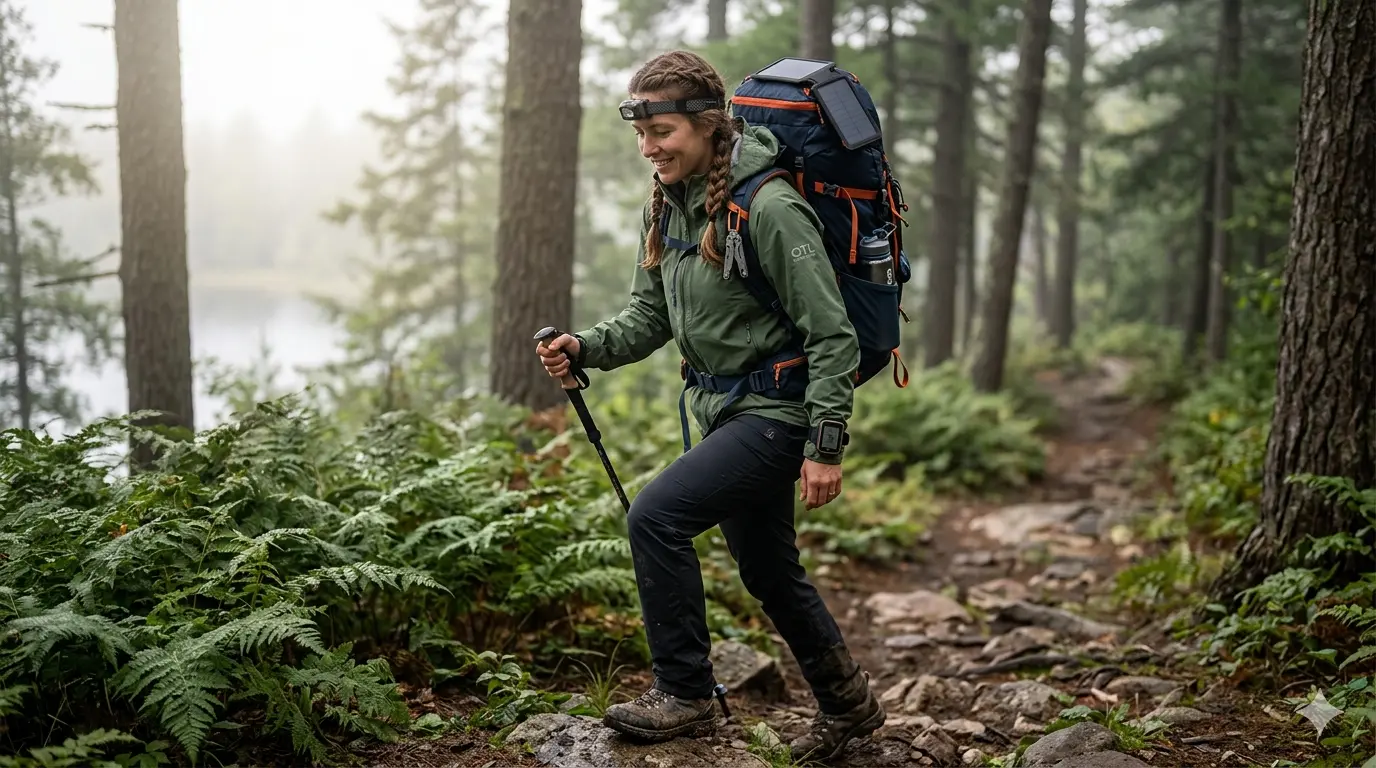
Spring 2026 — After 20+ Years Testing Gear in Northern Michigan Backcountry, These 7 Made the Cut
FIELD TESTED Pere Marquette · Manistee · Pictured Rocks | Spring 2026
⚡ TL;DR — The 30-Second Verdict
Best ultralight tent: Big Agnes Copper Spur HV UL2 — sub-2-lb freestanding design, nothing else matches it at this weight.
Best 3-season tent: MSR Hubba Hubba Bikepack — built for hard use, DuraShield durability wins on long trips.
Best pack for comfort: Osprey Atmos AG 65 — anti-gravity suspension is the decisive advantage in heat and humidity.
Best pack for heavy loads: Deuter Aircontact Core — body-contact system transfers 45+ lb loads better than anything at this price.
Best backpacking stove: MSR PocketRocket 2 — 2.6 oz, 3.5-minute boil, no moving parts to fail.
Best insulated water bottle: Hydro Flask Standard Mouth — 24-hour cold retention, lifetime warranty.
Best foam sleeping pad: NEMO Switchback — zero failure points, stacks R-value, never deflates.
👇 Full field notes, pros/cons, and comparison table below.
Most outdoor gear lists are built from spec sheets and press releases. This one isn’t.
Northern Michigan is a genuine testing ground — unpredictable weather, high humidity, cold shoulder-season nights, and terrain that ranges from sandy dunes to exposed UP ridgelines. Gear either earns its place in the kit or gets replaced.
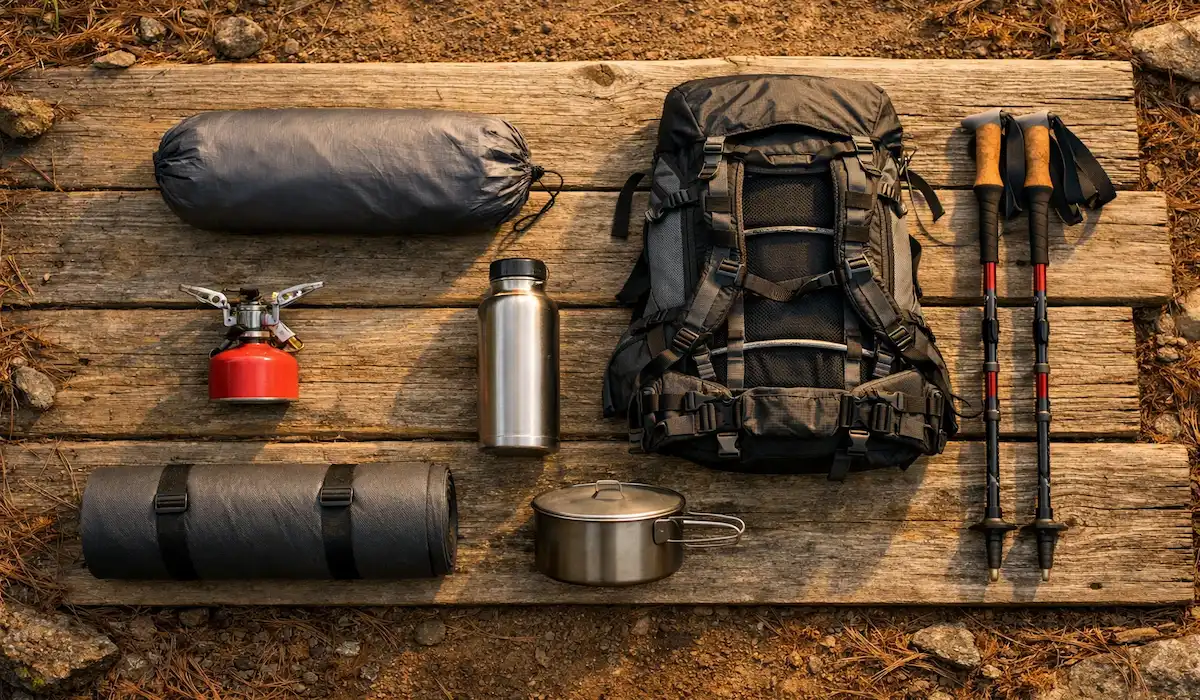
These 7 items earned their place. Two tents, two packs, a stove, a water bottle, and a sleeping pad — the core of a 3-season backcountry kit that doesn’t fail when the conditions get serious.
📋 Jump to Gear
OTL Spring 2026 Field Kit — Quick Comparison
All 7 items evaluated against Northern Michigan backcountry conditions. Using this table? You’re welcome to embed it with credit — contact us for the embed code.
| Product | Type | Best For | Key Advantage | vs. The Alternative |
|---|---|---|---|---|
| Big Agnes Copper Spur HV UL2 | Ultralight Tent | Gram counters, 3-season | Sub-2-lb freestanding shelter | Lighter than MSR Hubba Hubba |
| MSR Hubba Hubba Bikepack | 3-Season Tent | Trail/bikepacking camps | DuraShield durability + versatility | More rugged than Copper Spur |
| Osprey Atmos AG 65 | Pack — 65L | Comfort-first, 4–7 day trips | Anti-gravity ventilated suspension | More comfortable than Aether in heat |
| Deuter Aircontact Core 50+10 | Pack — 50+10L | Heavy loads, UP expeditions | Body-contact load transfer system | Better load transfer than Osprey |
| MSR PocketRocket 2 | Canister Stove | Ultralight cooking, 3-season | 2.6 oz, 3.5-min boil, zero failure points | Simpler and lighter than Jetboil |
| Hydro Flask Standard Mouth | Insulated Bottle | All-season hydration | 24-hr cold / 12-hr hot retention | Better temp retention than Yeti |
| NEMO Switchback | Foam Sleeping Pad | Backup pad, R-value stacking | Zero failure points + stackable insulation | More packable than Zlite |
Field tested by JC Courtland across Northern Michigan backcountry — Pere Marquette River corridor, Manistee National Forest, Pictured Rocks National Lakeshore, and Ludington State Park.
⛺ Shelter
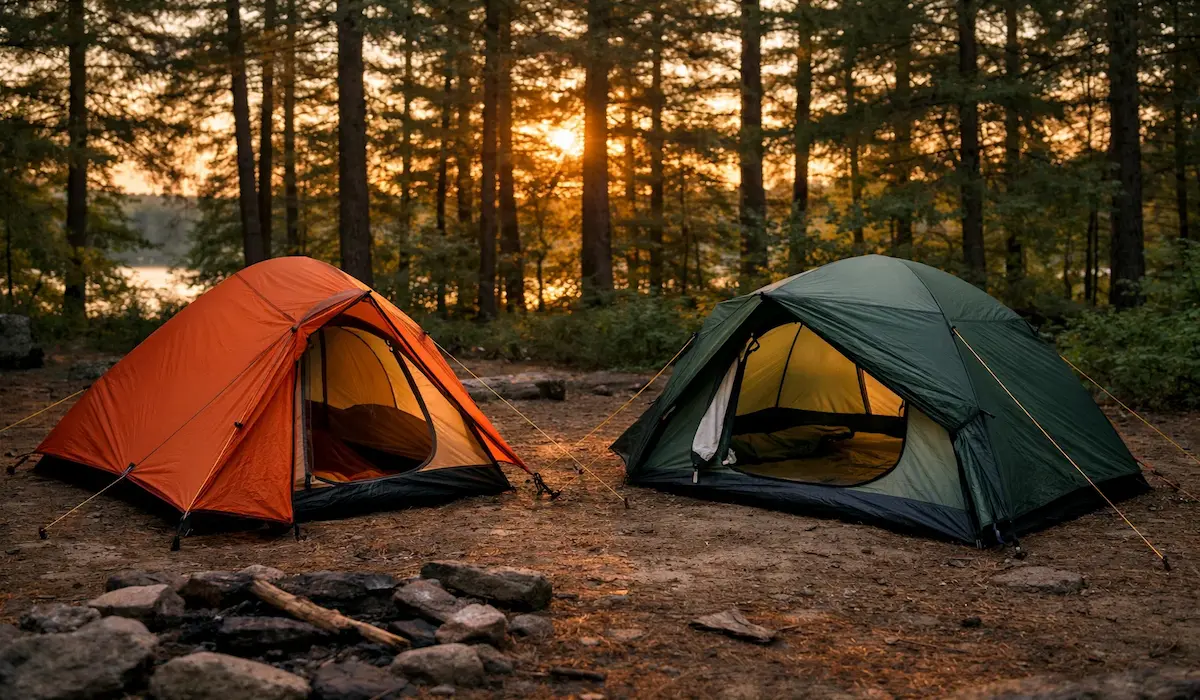
Big Agnes Copper Spur HV UL2
Ultralight Freestanding Backpacking Tent — 2 Person
The Copper Spur HV UL is the best ultralight tent benchmark — the freestanding ultralight tent that the backcountry community now uses as the comparison point for everything else, including the MSR on this list.
The high-volume geometry gives you real headroom in a sub-2-pound 2-person backpacking tent package. The mtnGLO lighting system is a genuine quality-of-life feature on early-season trips when darkness comes fast and you’re still making camp.
For Northern Michigan’s mixed conditions — warm humid nights shifting to cold wet mornings — the dual vestibules and cross-ventilating fly earn their place every time out.
Why It Made the List
⚡ The ultralight benchmarkThe 4-way hub pole design and proprietary double ripstop nylon deliver a structural integrity that competes with heavier shelters. You can stake it out in a headwind without babysitting it.
🌧️ Great Lakes weather readyThe awning-style vestibules create covered workspace that matters when you’re cooking in the rain at Sulak Campground on the Pere Marquette River in the Huron-Manistee National Forest. Most ultralight tents cut corners here. This one doesn’t.
✅ Pros
Sub-2-lb freestanding design — lightest full-featured tent in its class
mtnGLO lighting and dual vestibules add genuine field usability
❌ Cons
Premium price — highest cost-per-ounce entry on this list
⛺ Shelter
MSR Hubba Hubba Bikepack 2-Person
Bikepacking & Trail Camp Tent — 2 Person
MSR’s Hubba Hubba line is the best 3-season tent argument against the ultralight-only conversation — and when comparing Hubba Hubba vs Copper Spur, durability and weather resistance are where it wins. The Bikepack version extends that into two-wheeled territory.
As an MSR backpacking tent, the lightweight freestanding construction with Easton Syclone poles packs into a compact bundle — which matters when you’re already carrying a full 3-season kit across the Manistee National Forest two-track network.
Two doors, two vestibules, DuraShield waterproof coating that outlasts standard treatments significantly. The Manistee National Forest trail system, with its variable exposure and long distances between trailheads, is exactly the environment this tent was built for.
Why It Made the List
🚲 Trail versatility beyond bikepackingThe Bikepack-specific features — burly compression sack, daisy chain webbing — add utility for any trail camp where gear organization matters. On multi-day river paddles it doubles as a gear lashing point at camp.
💪 Built for hard useMSR’s DuraShield waterproof coating and Xtreme Shield option outlast standard coatings significantly. For backcountry trips where you can’t afford shelter failure, that durability margin is the deciding factor.
✅ Pros
DuraShield coating and Easton Syclone poles built for sustained hard use
Bikepack features add genuine versatility for trail, paddle, and bike camps
❌ Cons
Heavier than the Copper Spur — not the choice if grams are the priority
🎒 Pack
Osprey Atmos AG 65
Anti-Gravity Suspension Backpacking Pack — 65 Liters
The Osprey Atmos AG is consistently ranked the best backpacking pack for load comfort — the anti-gravity suspension pack that changed the conversation by using a continuous mesh frame that flexes with your movement rather than fighting it.
At 65 liters it covers 4 to 7 day trips with full shelter, sleep system, and food carry — the sweet spot for serious Northern Michigan routes. Compared to the Osprey Atmos vs Aether debate, the AG suspension is the decisive factor: the Atmos trades some volume for that mesh back panel advantage in heat and humidity.
The tradeoff is weight. The Atmos AG is not an ultralight pack. But for backpackers who prioritize comfort over grams on heavy-load trips, nothing at this price point comes close to what the AG suspension delivers on mile 15.
Why It Made the List
🔧 The suspension differenceThe AG mesh back panel keeps the pack off your back for airflow — critical on humid summer days in Manistee National Forest where a ventilated back panel is the difference between a manageable day and a miserable one.
📦 65L is the right sizeFor a Northern Michigan 5-day trip with full gear, 65 liters is the working capacity sweet spot. Enough for a 3-season shelter, sleep system, bear canister if needed, and four days of food without overloading. Pair it with our tested power banks for backpacking and your electronics are covered too.
✅ Pros
Anti-gravity mesh suspension delivers unmatched ventilated comfort on long days
65L capacity covers 4–7 day trips with full gear including hydration system
❌ Cons
Not an ultralight pack — frame and suspension add weight vs minimalist options
🎒 Pack
Deuter Aircontact Core 50+10
Body-Contact Load-Hauling Pack — 50+10 Liters
Where the Osprey Atmos AG prioritizes ventilated comfort, the Deuter Aircontact Core is the best unisex hiking backpack for pure load transfer — the body-contact system keeps the pack close to your center of gravity so heavier loads move with your body rather than fighting it.
In the Deuter vs Osprey debate, it comes down to load and conditions. The 50+10 expandable collar makes it effectively a 60-liter pack — a genuine 65L backpacking pack when fully extended for UP expeditions with longer food carries and heavier sleep systems.
As a durable trekking backpack, Deuter backs it with their Aircontact Promise: free or minimum-cost repair for a lifetime of use. For extended UP base camp trips where you’re also managing power for devices, pair it with our portable power station guide — the Aircontact has the capacity to carry the kit.
Why It Made the List
⚖️ The heavy-load specialistThe VariFlex pivoting hip belt and floating scapula pad move with you on uneven terrain. On long days with 45+ lb loads — which happens on extended UP route planning — that articulation prevents the hip fatigue that ends trips early.
🛠️ Built to outlast the competitionDeuter has manufactured packs since 1898. The Aircontact line reflects that institutional knowledge in its material selection and construction. This is a pack you buy once and replace only when you choose to, not when it fails.
✅ Pros
Body-contact system transfers heavy loads more efficiently than ventilated designs
Aircontact Promise lifetime repair commitment — buy once, use indefinitely
❌ Cons
Less back ventilation than the Osprey AG — not ideal in high heat and humidity
🔥 Cook System
MSR PocketRocket 2
Ultralight Canister Backpacking Stove
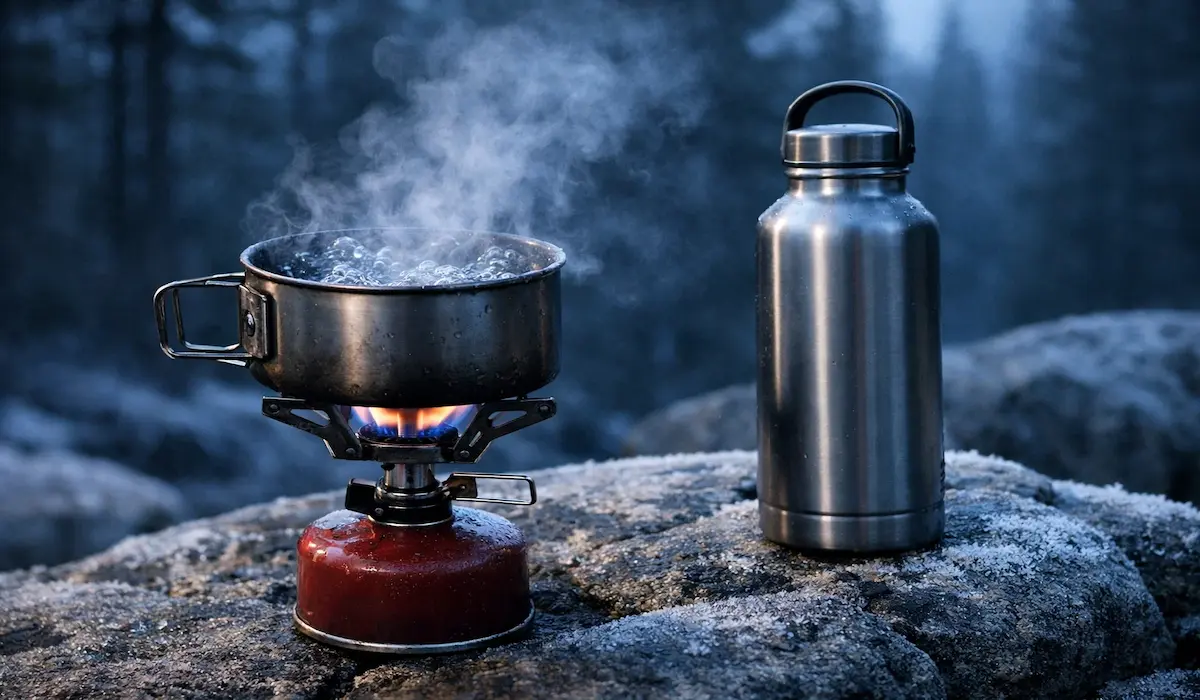
The PocketRocket 2 weighs 2.6 ounces, boils a liter of water in approximately 3.5 minutes, and has no moving parts to fail in the field. As a fast-boil backpacking stove it’s the benchmark — and the best backpacking stove for anyone who wants simplicity over complexity.
In the PocketRocket vs Jetboil debate: the Jetboil wins on integrated cooking efficiency, the PocketRocket wins on weight, simplicity, and universal pot compatibility. For backpackers who already own a pot they like, the PocketRocket 2 is the obvious choice at a fraction of the cost.
Runs on standard isobutane-propane canisters. Cold-weather performance drops below freezing as with all canister stoves — step up to a pressure-regulated model for consistent sub-freezing use. For 3-season Northern Michigan, it’s the standard.
Why It Made the List
⚡ The standard everyone measures againstThe PocketRocket 2 has been in production long enough that it has accumulated more field data than nearly any other canister stove on the market. That reliability track record is worth more than any lab spec.
🎒 True ultralight credentialsAt 2.6 ounces it disappears into a kit. Paired with a titanium pot and a 110g fuel canister, you can run a complete hot-food system for a 4-day trip under 12 ounces combined weight. For the solo backcountry traveler, that’s a significant system win. See our solo camping gear guide for how this stove fits a complete kit.
✅ Pros
2.6 oz trail weight — disappears into any kit without a meaningful penalty
Universal canister compatibility and no moving parts — nothing to fail in the field
❌ Cons
Performance drops below freezing — needs pressure regulation for consistent sub-32°F use
💧 Hydration
Hydro Flask Standard Mouth
Vacuum Insulated Stainless Steel Water Bottle
The Hydro Flask Standard Mouth is the best insulated water bottle argument that has outlasted every trend and competitor cycle — including the Hydro Flask vs Yeti debate. TempShield double-wall vacuum insulation delivers on its temperature retention claims where many competitors fall short in real-world conditions.
Cold water stays cold for up to 24 hours. Hot coffee stays hot for up to 12 hours. On a Northern Michigan shoulder-season trip where morning temps are in the 30s and afternoon temps push 60°F, that range in a single bottle is genuinely useful — not just a spec sheet claim.
The 18/8 stainless steel construction means no flavor transfer over years of use. The Standard Mouth opening fits most water filters and ice cubes while still being drinkable on the move. It’s the unglamorous workhorse of the hydration category — which is exactly why it belongs on this list.
Why It Made the List
🌡️ Temperature performance that holds upMost insulated bottles underperform their rated temperature retention in real-world conditions. The Hydro Flask consistently performs close to spec — an important distinction when cold water access on a warm July day in the Manistee backcountry is genuinely motivating.
🔄 Lifetime durabilityHydro Flask backs this bottle with a lifetime warranty. The powder coat exterior holds up to pack abrasion better than comparable bottles at this price point. This is a one-time purchase for most owners.
✅ Pros
Up to 24-hr cold / 12-hr hot retention in real-world conditions
Lifetime warranty and 18/8 stainless steel with no flavor transfer
❌ Cons
Heavier than ultralight alternatives — gram-counters may prefer titanium or plastic
🛏️ Sleep System
NEMO Switchback Sleeping Pad
Closed-Cell Foam Sleeping Pad — Full Length
The NEMO Switchback is the best foam sleeping pad that reimagined a classic design — the ultralight sleeping pad benchmark that consistently edges the Switchback vs Zlite comparison in packed size and thermal performance despite both being durable closed-cell foam pads.
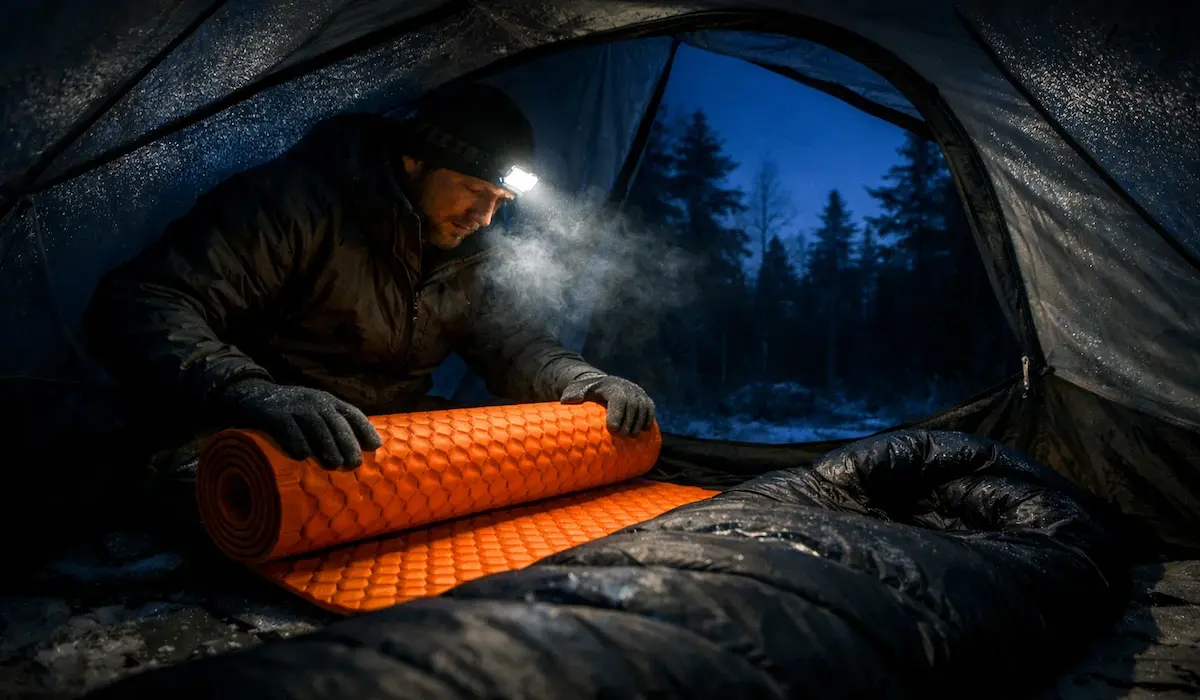
The hexagonal node pattern molded from dual-density Axiotomic foam compresses to an industry-leading packed size while delivering more thermal performance than previous-generation foam pads. The metallized thermal film layer reflects body heat back efficiently — critical for cold ground camping on spring Michigan nights.
As we covered in our sleeping bag ratings guide, the ISO test assumes an R-5.3 pad. The Switchback stacks well under an inflatable for cold-ground situations — and unlike your inflatable, it will never puncture at 11pm on a remote ridgeline.
Why It Made the List
🔒 Zero failure pointsA closed-cell foam pad cannot deflate, puncture, seam-separate, or valve-fail. On a multi-day backcountry trip where a sleep system failure is a safety issue, that reliability is the argument. The Switchback is the insurance policy under your inflatable.
📐 The R-value stacking advantageThe Switchback’s R-value stacks directly with an inflatable pad underneath it. Two pads used together provide additive insulation that can push a summer system well into shoulder-season capability. NEMO backs it with a lifetime warranty against manufacturing defects.
✅ Pros
Closed-cell foam — zero puncture, valve, or deflation failure risk ever
R-value stacks with an inflatable for cold-ground insurance at minimal weight
❌ Cons
Less cushioning than quality inflatables — side sleepers may feel the difference
Frequently Asked Questions
Common questions about these 7 picks answered below. For broader research, our outdoor gear questions answered guide covers the full category.
▶ Is the Big Agnes Copper Spur HV UL worth the premium over cheaper ultralight tents?
For backpackers who prioritize genuine weight savings without sacrificing structural integrity, yes. The Copper Spur HV UL’s proprietary ripstop nylon and 4-way hub pole design deliver a strength-to-weight ratio that cheaper alternatives don’t match — and that gap shows up on the second and third nights of a multi-day trip in variable weather.
The mtnGLO tent lighting system is a genuine convenience feature that most competitors don’t offer at any price. For backcountry trips with early sunsets or late camp arrivals, hands-free interior lighting changes the experience meaningfully.
The honest caveat: if you’re doing car camping or weekend trips in mild conditions, the price premium is harder to justify. The Copper Spur earns its value on longer, harder trips where every ounce and every weather-resistance margin actually matters.
▶ What’s the difference between the MSR Hubba Hubba NX and the Bikepack version?
The Hubba Hubba Bikepack uses a shortened 12-inch Shortstik pole set designed to attach to handlebars, panniers, and saddlebags — making it the bikepacking-specific variant. It also includes a burly compression stuff sack with daisy chain webbing for bike-frame attachment and a helmet storage system on the fly exterior.
The standard Hubba Hubba NX uses full-length poles and a standard stuff sack. For traditional backpacking without a bike involved, the NX is the cleaner choice.
For any trip that involves wheeled travel — or where the Bikepack’s more compact pole bundle is an advantage — the Bikepack version has real utility well beyond its namesake use case.
Both share the same tent body, vestibule design, and MSR DuraShield waterproof coating. The pole geometry and stuff sack system are the meaningful differences.
▶ Osprey Atmos AG vs Deuter Aircontact — how do I choose?
The core distinction is ventilated comfort vs load-transfer efficiency. The Osprey Atmos AG’s mesh back panel keeps the pack off your body for airflow — better for warm, humid conditions where back sweat is a real issue.
The Deuter Aircontact body-contact system sits the pack closer to your center of gravity, which transfers heavy loads more efficiently but generates more back heat.
Rule of thumb: if your trips run warm and your loads are moderate (30–40 lbs), the Osprey Atmos AG is the comfort choice. If your trips involve heavy loads (45+ lbs), longer distances, or colder conditions where back ventilation isn’t a priority, the Deuter Aircontact’s load transfer advantage pays off over miles.
Both are exceptional packs at their price points. The fit session matters more than the brand — try both loaded before committing.
▶ Does the MSR PocketRocket 2 work in cold weather and wind?
The PocketRocket 2 performs well down to around freezing in moderate wind conditions with the optional MSR WindClip windshield. Below freezing, canister pressure drops and boil times extend — this is a physics limitation of isobutane-propane fuel, not a flaw specific to the PocketRocket 2.
For consistent below-freezing performance, a pressure-regulated stove like the MSR PocketRocket Deluxe is the better choice. For 3-season Northern Michigan use — spring through fall — the PocketRocket 2 handles the conditions you’ll realistically encounter without the added cost or complexity of pressure regulation.
The standard field trick for cold canister performance: warm the canister in a sleeping bag or jacket pocket before use. Even a few minutes of pre-warming significantly improves cold-weather output.
▶ How long does the Hydro Flask Standard Mouth actually keep water cold?
In real-world testing — not controlled lab conditions — the Hydro Flask Standard Mouth consistently delivers cold water at 24 hours in ambient temperatures up to the mid-70s°F. In warmer conditions or direct sun exposure, performance drops somewhat but still meaningfully outperforms single-wall bottles.
For hot liquids, 12-hour retention is achievable if the bottle is pre-heated with hot water before filling — a standard thermos technique that applies here as well. Without pre-heating, expect 8–10 hours of meaningful heat retention.
The Standard Mouth opening is the right choice for most backpacking use cases — narrow enough to drink from cleanly on the move, wide enough to fit ice cubes and most water filter intake tubes. The Wide Mouth opens more options for filling but is harder to drink from without a cap swap.
▶ Can the NEMO Switchback be used as a standalone sleeping pad?
Yes, and it handles 3-season conditions effectively as a standalone pad for most backpackers. The dual-density Axiotomic foam and metallized thermal film layer provide meaningful insulation and more comfort than previous-generation closed-cell foam pads.
That said, most backpackers find foam pads less comfortable than quality inflatables for side sleeping or those with hip and shoulder pressure points. The Switchback’s strongest use case is as a supplement to an inflatable — adding R-value redundancy and puncture insurance to a complete sleep system.
For thru-hikers and ultralight backpackers who want to eliminate inflatable failure risk entirely, the Switchback as a standalone is a legitimate choice. It compresses smaller than most foam pads on the market and its packed size is genuinely competitive.
▶ What’s the best tent for Northern Michigan’s spring shoulder season?
Spring in Northern Michigan means cold nights, high humidity, variable rain, and occasional wind — especially on exposed shoreline and ridgeline camps. The two most important features for shoulder-season performance are waterproof fly coverage and vestibule geometry that keeps gear dry outside the tent body.
Both the Big Agnes Copper Spur HV UL and the MSR Hubba Hubba Bikepack handle these conditions reliably. The Big Agnes is the lighter choice for warmer spring trips. The MSR is the durability choice for conditions where you want more structural confidence in sustained wind and rain.
Stake out all guy lines regardless of forecast — Great Lakes weather can shift from calm to 25mph gusts in under an hour on shoreline camps. Site selection and proper staking matter as much as tent spec in Northern Michigan shoulder conditions.
▶ Do I need a satellite communicator for Northern Michigan backcountry trips?
For any multi-day backcountry trip in Northern Michigan — particularly in the UP or on remote river corridors — a satellite communicator is strongly recommended. Cell coverage in Manistee National Forest and across most of the UP backcountry is unreliable to nonexistent, and emergency response times to remote areas can be significant.
A satellite communicator provides two-way messaging and SOS capability regardless of cell coverage. The peace of mind it provides for solo travel and technical terrain is worth the subscription cost on any serious trip.
See our field comparison of the Garmin inReach Mini 2 vs Mini 3 for a detailed breakdown of the current best options in the category.
📚 Official Resources: Northern Michigan Backcountry Planning
For trip planning, permit requirements, trail conditions, and safety guidelines across Northern Michigan backcountry destinations:
- USDA Forest Service — Huron-Manistee National Forests — Official trail conditions, permit information, and backcountry regulations for Manistee National Forest and the surrounding region
- Pictured Rocks National Lakeshore — Backcountry Camping — Official NPS backcountry camping permits, campsite locations, and regulations for Pictured Rocks National Lakeshore on Michigan’s Upper Peninsula
Always check current trail conditions and permit availability before departure. Northern Michigan backcountry conditions change significantly between early spring and summer — what’s passable in June may require different gear in April.
OTL Bottom Line: Outdoor Gear That Holds Up
Gear lists are easy to write. Field-tested gear lists are harder — they require enough real miles in real conditions to know where the marketing claims end and the actual performance begins.
These 7 outdoor gear picks represent two shelter options for different trip types, two packs for different load and comfort priorities, and three pieces of the kit that make the difference between a camp that functions and one that doesn’t.
None of them are the cheapest option in their category. All of them are the correct choice for serious Northern Michigan backcountry use where the conditions test gear honestly.
For solo trips, combine these picks with our backcountry safety guide and a satellite communicator before heading into remote territory. The gear matters. The planning matters more.
What’s on your Northern Michigan spring kit list? Drop it in the comments — we’re always looking for gear that’s earned real miles on Great Lakes backcountry terrain.
Shop the Full OTL Spring 2026 Field Kit
Field tested by JC Courtland across Northern Michigan — Pere Marquette River corridor, Manistee National Forest, Pictured Rocks National Lakeshore, and Ludington State Park.
Updated April 2026 | Outdoor Tech Lab | Ludington, Michigan



Leave a Reply